
- HOME
- OPINION
- ON GROUND
- INTERVIEW
- Neta Profile
- Editor's Pick
- INDIA
- NewsGram USA
- WORLD
- न्यूजग्राम
- POLITICS
- ENTERTAINMENT
- CULTURE
- LIFESTYLE
- ECONOMY
- SPORTS
- Jobs / Internships
- Misc.
- NewsGram Exclusive
Hair loss can affect both men and women, and not all patients have enough healthy scalp donor hair to support traditional hair transplant procedures. In such cases, body hair transplantation in Mumbai has become an important alternative, especially when combined with approaches used in female hair transplant in Mumbai. This technique allows specialists to use hair from other parts of the body to restore scalp density while maintaining safety, natural appearance, and long-term viability. Understanding how specialists perform this procedure helps patients set realistic expectations and prepare properly.
Body hair transplantation involves harvesting hair follicles from areas such as the chest, back, arms, legs, or beard and implanting them into the scalp. These hairs are carefully selected and placed to blend with existing scalp hair.
Some patients experience extensive hair loss or have weak donor areas on the scalp. Body hair provides an additional donor source, making hair restoration possible when scalp hair alone is insufficient.
In female hair transplant in Mumbai, body hair transplantation is used selectively. Women often experience diffuse thinning rather than complete baldness, so body hair may be used to improve density in specific areas when scalp donor hair is limited.

Specialists begin by assessing the patient’s hair loss pattern, scalp condition, and overall hair quality. This step is essential to determine whether body hair is suitable for transplantation.
Not all body hair behaves the same as scalp hair. Specialists examine texture, thickness, growth cycle, and colour to decide which body areas provide the most compatible donor hair.
Patients are informed that body hair may grow differently from scalp hair. Growth rate, length, and texture can vary, so outcomes are discussed clearly to ensure realistic goals.
Common donor sites include the chest, beard, and back. Beard hair is often preferred due to its thickness and strength, especially for enhancing scalp density.
The scalp area receiving the transplanted hair is planned carefully. For female patients, emphasis is placed on blending hair naturally to avoid patchy or uneven results.
Specialists calculate how many grafts are required to achieve balanced coverage while preserving donor areas and avoiding overharvesting.
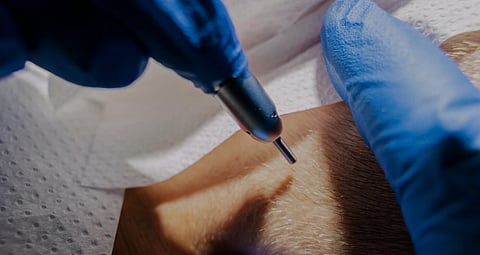
Body hair transplantation in Mumbai is usually performed using Follicular Unit Extraction (FUE). This technique involves extracting individual follicles with precision tools.
Because body hair areas are often visible, specialists use small punches and careful spacing to minimise scarring and ensure smooth healing.
Local anaesthesia is applied to donor areas to reduce discomfort. Specialists adjust their technique depending on skin sensitivity and hair depth.
The recipient area is cleaned and prepared to receive the grafts. Tiny incisions are created at specific angles to match natural hair growth patterns.
Body hair follicles are placed strategically to blend with existing scalp hair. Specialists often use body hair behind the hairline or in crown areas rather than the frontal hairline.
Careful spacing ensures that the transplanted hair looks natural and avoids overcrowding, which can affect blood supply and graft survival.
Women commonly experience thinning across the scalp rather than isolated bald patches. Body hair is used selectively to add density without altering the natural hairline.
Specialists pay close attention to texture differences between body hair and scalp hair. Finer body hair may be used in areas requiring softer coverage.
For female hair transplant in Mumbai, maintaining a soft, natural hairline is essential. Body hair is rarely used at the front unless it closely matches scalp hair characteristics.
Body donor sites usually heal quickly, with small marks that fade over time. Patients are advised on skincare and hygiene to support recovery.
Swelling, redness, or mild discomfort may occur in the recipient area. These effects typically subside within days to weeks.
Patients receive instructions on washing, activity restrictions, and sun protection. Following these guidelines helps maximise graft survival.
Transplanted body hair often sheds within the first few weeks. This is a normal part of the hair growth cycle.
New hair growth usually begins within three to four months. Body hair may grow more slowly than scalp hair initially.
Over time, transplanted body hair adapts to the scalp environment, although it may retain some characteristics of its original growth pattern.
Not all patients are ideal candidates for body hair transplantation. Specialists consider overall health, hair characteristics, and long-term goals before recommending this approach.
When performed by experienced specialists, the procedure is generally safe. Proper technique reduces risks such as infection, poor growth, or visible scarring.
Body hair transplantation requires advanced skill due to differences in hair angle, depth, and growth cycle. Choosing an experienced clinic is critical for success.
Patients who were previously unsuitable for traditional hair transplants gain access to effective restoration options.
Enhanced scalp coverage can significantly improve self-esteem, particularly for women dealing with long-term hair thinning.
When planned and executed correctly, body hair transplantation blends seamlessly with existing hair, supporting a natural look.
Clinics offering body hair transplantation in Mumbai should have proven experience in harvesting and implanting body hair safely.
For women, selecting a clinic skilled in female hair transplant in Mumbai ensures that density improvements are subtle and natural.
A clinic that prioritises customised planning and detailed consultation supports better outcomes and patient satisfaction.
Body hair transplantation in Mumbai provides an effective solution for patients with limited scalp donor hair, including those seeking female hair transplant in Mumbai. By carefully selecting donor areas, using advanced FUE techniques, and tailoring placement strategies, specialists can achieve natural-looking and long-lasting results. With proper planning, realistic expectations, and expert care, body hair transplantation expands hair restoration possibilities while maintaining safety, balance, and confidence.
Suggested Reading:
Subscribe to our channels on YouTube and WhatsApp
Download our app on Play Store
