
- HOME
- OPINION
- ON GROUND
- INTERVIEW
- Neta Profile
- Editor's Pick
- INDIA
- NewsGram USA
- WORLD
- न्यूजग्राम
- POLITICS
- ENTERTAINMENT
- CULTURE
- LIFESTYLE
- ECONOMY
- SPORTS
- Jobs / Internships
- Misc.
- NewsGram Exclusive

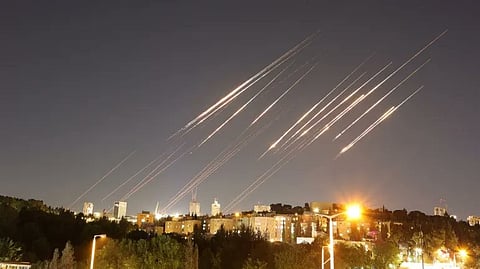
ON THE EVENING OF JUNE 7, 2026, SUNDAY, Israel and Iran traded blows, breaking the ceasefire that had been in place for nearly two months since April 2026. Despite US President Donald Trump’s attempts to mediate the conflict, Israeli Prime Minister Netanyahu refuses to listen, continuing his airstrikes in the early hours of Monday morning, announcing a major blow on a Petrochemical plant in Iran.
Iran's first direct attack on Israel came following the latter's airstrike on Lebanon. The April ceasefire agreement reportedly didn’t cover this area, leading to Israeli forces attacking the Iran-backed Hezbollah militants in Lebanon. However, Iran claims Israel’s ground invasion of Beirut and further airstrikes are violations of the ceasefire. Iran believes any deal with the President of the United States (POTUS) to end the war should end the attacks on Lebanon as well.
The conflict began on February 28, 2026, with the United States and Israel striking Iran. The US repeatedly claims it was to stop Iran from acquiring nuclear weapons, but Israel has stated their motive is a complete regime change in the country. As a result, the US sent its troops and military to Israel to carry out strikes on the military and nuclear testing sites in Iran.
The war continued for more than a month with attacks reaching beyond military sites to civilian locations and major energy hubs. After thousands of civilian casualties and a threat to global energy trade, the US and Iran finally reached a ceasefire on April 7, 2026. However, the ceasefire didn’t cover Israel's conflict with Lebanon, who had joined the middle east war with Iran’s backed Hezbollah militants.
On April 14, 2026, Lebanon and Israel held their historic diplomatic talks in Washington after decades. A fragile ceasefire was reached, though, it was reported that the Hezbollah group didn’t agree to it leading to the continuation of the conflict. In the period between late-May and early-June, Israel held its deepest ground invasion in Lebanon in over 25 years. Israeli PM Benjamin Netanyahu threatened to attack the Lebanese capital, Beirut, if Hezbollah didn’t stop their offense.
Despite Israel and Lebanon renewing their fragile ceasefire on June 3, Hezbollah refuted it, demanding Israel’s complete retreat from the region. Iran also stated that “no calm” can be maintained in the region until Israel doesn't withdraw.
After warnings from both sides Israel launched an airstrike on southern Lebanon, reportedly killing at least three Lebanese military troops on June 6. In retaliation, on Sunday, June 7, Hezbollah and Israel continued to trade blows, finally leading to Iran joining the conflict late Sunday evening, carrying out their own airstrikes on northern Israel.
On early Monday morning, June 8, 2026, Israel Defense Forces (IDF) released a statement that it, ““struck military targets belonging to the Iranian terror regime in Western and Central Iran”. As a precautionary measure, schools in the Israeli capital, Tel Aviv were closed.
Last week, a leaked call between Trump and Netanyahu was reported to have expletives being exchanged between the leaders. According to media reports, the US President had scolded and reprimanded Netanyahu over his aggressive advancement in Lebanon.
Despite America’s early advances, Trump has now realized a long costly war that can cause a long-term global energy crisis is not the ideal way to move forward. The President of the United States (POTUS) claims their main goal is only to deprive Iran from being a nuclear power. The POTUS is now trying to achieve this via the diplomatic channel, maintaining his stance of ceasefire.
However, his Israeli counterpart continues to attack both Lebanon and Iran which many in the country believe is to protect his image in the ongoing conflict. President Trump again reached out to Tel Aviv after Sunday’s attack to not retaliate against Iran. The response was anything but what the American leader had hoped for as Israel, on early Monday morning, announced that it had struck a petrochemical plant in Iran’s southwest region along with a few military targets.
Media reports from Israel believe Netanyahu is not eager to listen to Trump’s calls for de-escalation. Many in Israel are reportedly asking the PM to continue their attacks on Iran in order to preserve its “strongman” image. Despite Trump’s push for a deal in Iran, the middle east nations refuse to back down, carrying out a second wave of attacks as explosions were heard in Tehran, Tabriz, and Isfahan. The retaliatory fire continues from both sides, ending the ceasefire after two months and sparking new fears of renewed war in the Middle East.
Suggested Reading
Subscribe to our channels on YouTube and WhatsApp
Download our app on Play Store

.jpg)