
- HOME
- OPINION
- ON GROUND
- INTERVIEW
- Neta Profile
- Editor's Pick
- INDIA
- NewsGram USA
- WORLD
- न्यूजग्राम
- POLITICS
- ENTERTAINMENT
- CULTURE
- LIFESTYLE
- ECONOMY
- SPORTS
- Jobs / Internships
- Misc.
- NewsGram Exclusive

R.K. Dhawan served as Indira Gandhi’s closest aide for over two decades, controlling access to her and handling sensitive political matters.
His power peaked during the Emergency (1975–77), when he played a key role in implementing government decisions and coordinating administration.
After Indira Gandhi’s death, Dhawan later became a Rajya Sabha member and minister, remaining loyal to the Congress despite controversies.
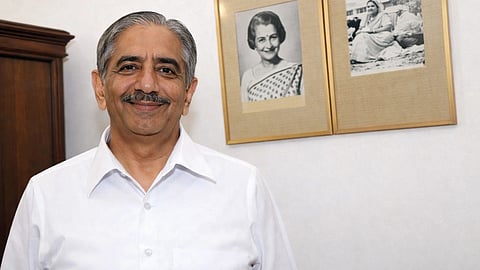
Rajendra Kumar Dhawan, popularly known as R.K. Dhawan was one of the closest and most trusted aides of former Prime Minister Indira Gandhi. Often described as her “man Friday,” confidante, and gatekeeper, he controlled access to her and played a decisive role in the functioning of the Prime Minister’s Office. His loyalty, discretion, and constant presence made him very important to Indira Gandhi for over two decades.
Despite his immense political influence, Dhawan remained unmarried for most of his life. It is said that he had a long relationship with a woman named Achla Mohan, whom he later married in October 2011 at the age of 74 in a quiet ceremony in Delhi. The couple had known each other since the 1970s and reunited after her divorce in 1990. Dhawan passed away in August 2018, seven years after his marriage.
R.K. Dhawan shared an exceptionally close relationship with Indira Gandhi. He joined her secretariat in 1962 and soon became her most trusted aide. Over the years, he learned to anticipate her needs and often understood her intentions even before she expressed them. Ministers, bureaucrats, and party leaders depended on him to secure meetings with the Prime Minister, as he controlled her schedule and access.
Indira Gandhi trusted Dhawan completely and relied on him to execute sensitive tasks. He conveyed her instructions to senior leaders, handled confidential matters, and acted as her eyes and ears within the government. During the early 1970s, he also worked closely with her son Sanjay Gandhi and played a role in strengthening Sanjay’s political influence.
Dhawan’s power reached its peak during the Emergency (1975–77), when he acted as the gatekeeper to Indira Gandhi. He helped implement arrest orders, coordinated administrative actions, and ensured compliance with government directives. He carried the Emergency proclamation to the President and worked with senior officials to enforce it. Though controversial, he always defended Indira Gandhi’s decisions and remained loyal to her.
Before the 1980 elections and after the Emergency in 1977, when Indira Gandhi was out of power, Dhawan arranged meetings with spiritual figures to provide her emotional support. He approved the entry of religious advisers and supervised unusual rituals meant to bring political success. After Sanjay Gandhi’s death in 1980, he remained by Indira’s side and helped her cope with the tragedy.
On October 31, 1984, Dhawan was just steps behind Indira Gandhi when she was assassinated. He rushed her to AIIMS Hospital for treatment along with security and personal attendants. Her death deeply affected him and marked the end of his most powerful phase. Though later questioned by the Thakkar Commission, he was eventually cleared and remained devoted to her legacy.
Born on July 16, 1937, in Chiniot (now in Pakistan), R.K. Dhawan began his career as a stenographer in Jawaharlal Nehru’s era. He joined Indira Gandhi’s office in 1962 at the age of 24 and rose steadily through dedication and hard work. From 1963 onwards, he reportedly did not take a single day off, working with the Prime Minister every day.
Over time, he became one of the most powerful individuals in Indian politics without initially holding an elected office. He influenced appointments, transfers, and political decisions. His authority made him feared and respected within the Congress and the bureaucracy.
After Indira Gandhi’s death, Dhawan’s influence declined under Rajiv Gandhi but later revived in 1989. He became a Rajya Sabha member in 1990, joined the Congress Working Committee, and served as Minister of State (Independent Charge) for Urban Development and Housing under Prime Minister P.V. Narasimha Rao. Sonia Gandhi also retained him within the party due to his loyalty.
Dhawan faced several controversies, including allegations in major political cases, but was never proven guilty. Though he considered writing a memoir, he eventually abandoned the idea.
[VP]
Suggested Reading:
Subscribe to our channels on YouTube and WhatsApp
Download our app on Play Store
