
- HOME
- OPINION
- ON GROUND
- INTERVIEW
- Neta Profile
- Editor's Pick
- INDIA
- NewsGram USA
- WORLD
- न्यूजग्राम
- POLITICS
- ENTERTAINMENT
- CULTURE
- LIFESTYLE
- ECONOMY
- SPORTS
- Jobs / Internships
- Misc.
- NewsGram Exclusive

This article was originally published in MedBound Times. Read the original article.
By Dr. Theresa Lily Thomas
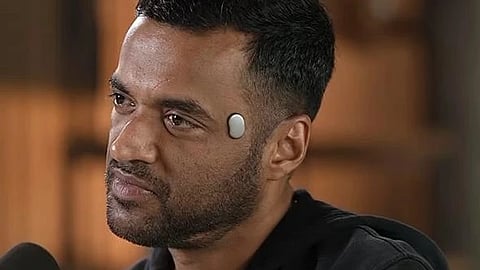
Deepinder Goyal, the co-founder and CEO of Zomato, food delivery platform, and CEO of the venture Eternal, recently appeared on a YouTube podcast wearing a small sensor-like device attached near his temple that captured public attention.
The device, called Temple, is an experimental wearable designed to monitor blood flow to the brain in real time and is linked to Goyal’s research interest in ageing and neurological health.
Temple is not a commercial product yet and is separate from Zomato’s food-delivery business; it is part of Goyal’s personal health-technology research funded through his initiative, Continue Research, with roughly $25 million committed to the project.
Goyal and his team describe Temple as a non-invasive wearable sensor that continuously tracks blood flow to the brain or head region, and potentially other indicators of neurological health. This is based on the idea that cerebral blood flow and its changes over time can be informative about brain ageing and function, and that monitoring those changes continuously could yield insights into how the brain ages.
A key concept associated with Temple is the “Gravity Ageing Hypothesis,” which suggests that the force of gravity acting on blood circulation over a lifetime may progressively reduce blood flow to the brain and contribute to ageing processes. Goyal has publicly discussed this idea, though he acknowledges it as a hypothesis rather than established fact.
Importantly, the device is still in the experimental stage and has not undergone large-scale clinical validation or regulatory approval as a medical device for diagnosing or treating health conditions.
According to information shared by Goyal and reporting on the device:
Temple is intended to measure blood flow signals in the head region in real time from the temporal artery.
The device is small and worn externally near the temple area.
The goal is continuous monitoring that might someday reveal patterns in cerebral circulation linked to ageing or cognitive health.
It is described as a research tool rather than a diagnostic medical instrument.
Blood flow to the brain, or cerebral perfusion, is a recognized indicator of neurological health. In controlled clinical settings, technologies like functional MRI (fMRI) and functional near-infrared spectroscopy (fNIRS) are used to estimate cerebral blood flow or brain activity for research or diagnostic purposes. However, these methods involve specialized equipment, trained operators, and controlled environments.
There is no established non-invasive consumer wearable that can currently measure true cerebral blood flow with the accuracy and clinical reliability of hospital-based imaging technologies.
Medical experts have weighed in on Temple’s scientific plausibility and its current limitations:
Lack of Clinical Validation: Dr. Suvrankar Datta, a radiologist and one of the earliest researchers in India in Arterial Stiffness and Pulse Wave Velocity trained at AIIMS Delhi, described Temple as having “zero scientific standing” at present and cautioned against considering it a medically validated device.
Measurement Limitations: Experts note that sensors on the surface of the skin near the temple can at best detect superficial signals. They emphasize that methods like MRI or fNIRS are required to accurately estimate brain blood flow and metabolism.
Standard Measures: In cardiovascular research, validated metrics such as carotid-femoral pulse wave velocity (cfPWV) are used to assess arterial health; no equivalent scientific consensus exists for wearable temporal blood-flow measurements as reliable markers of brain health.
Gravity Hypothesis Not Established: Critics point out that the Gravity Ageing Hypothesis lacks mainstream empirical support. For example, astronauts in low-gravity environments do not stop ageing, showing that gravity’s role in biological ageing is not straightforward.
Overall, experts describe the device as experimental and exploratory, with claims that exceed what is currently supported by peer-reviewed scientific evidence.
Temple remains primarily a research prototype rather than a commercial health tracker. Goyal and his team are reportedly refining the technology and sharing findings, but clinical studies, regulatory review, and peer-reviewed publications would be necessary before such a device could be recommended for medical use.
Deepinder Goyal’s Temple wearable device represents an ambitious attempt to monitor brain blood flow continuously and to explore connections between circulation and ageing. The concept has attracted public curiosity and scientific debate. At present, experts emphasize that Temple is an experimental tool rather than a scientifically validated medical device.
[DS]
Suggested Reading:
Subscribe to our channels on YouTube and WhatsApp
Download our app on Play Store
