
- HOME
- OPINION
- ON GROUND
- INTERVIEW
- Neta Profile
- Editor's Pick
- INDIA
- NewsGram USA
- WORLD
- न्यूजग्राम
- POLITICS
- ENTERTAINMENT
- CULTURE
- LIFESTYLE
- ECONOMY
- SPORTS
- Jobs / Internships
- Misc.
- NewsGram Exclusive

Key Points
Noor Ahmed Ajahri had alleged that the killing of gangster-turned-politician Atiq Ahmed and his brother Ashraf in April 2023 was a conspiracy by the Yogi Adityanath administration and that BJP-ruled states 'trample the Constitution' by intimidating Muslims.
An FIR was filed against Ajahri in May 2023 for inciting communal hostility, disturbing public peace and promoting enmity or hatred between communities.
Allahbad HC held that a prima facie case cannot be dismissed at the preliminary stage and that the trial must proceed.
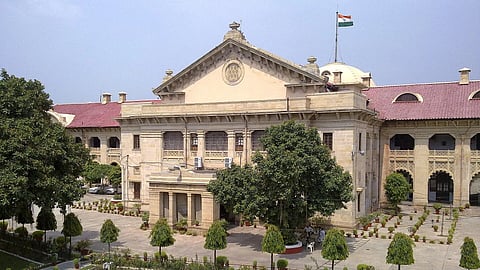
The Allahabad High Court, on 16 March 2026, refused to quash criminal proceedings against Noor Ahmed Ajahri, Uttar Pradesh State President of the Muslim Personal Law Board, over remarks made in a viral video from 2023. The case arises from an FIR registered at Puranpur Police Station in Uttar Pradesh’s Pilibhit district for inciting communal hostility and disturbing public peace.
Following the killing of gangster-turned-politician Atiq Ahmed and his brother Ashraf in April 2023, Ajahri had alleged that the encounter was a conspiracy by the Yogi Adityanath administration. He argued that governments of BJP ruled states were trying to intimidate Muslims and, by doing so, had “trampled the Constitution into the ground.”
Based on the viral video, police registered an FIR initially under Sections 153A and 295A of the Indian Penal Code. After investigation, a chargesheet was filed under Section 505(2) IPC, which deals with statements promoting enmity or hatred between communities.
The applicant challenged the proceedings before the High Court, arguing that he had expressed his views as State President of the Muslim Personal Law Board during public debates and had not made statements falling within the scope of the IPC Section.
His counsel further contended that the investigation was not conducted fairly and that the magistrate took cognisance without applying judicial mind, amounting to abuse of process of law.
The State opposed the plea, arguing that the issues raised involved disputed questions of fact and required examination of evidence during trial. It further submitted that at the stage of cognisance, the court is only required to assess whether a prima facie case exists.
After hearing both sides, the High Court framed the central question as “whether the act of applicant as alleged through narration of the FIR comes under the ambit of offence mentioned in Section 505(2) IPC or not”.
The Court reproduced Section 505(2) IPC, which penalises statements intended to promote enmity or hatred between different religious, racial, or community groups.
Referring to the allegations in the FIR, the Court observed:
“By bare perusal of the narrations made in the FIR wherein it has been mentioned that applicant is accused of spreading religious excitement and communal feelings among a particular community which has the effect of creating hostility among people.
The allegations also suggest that such actions may provoke people, out of hatred towards the government, to engage in rioting and disturbances, which can disturb public peace and order and as such, at this stage, it cannot be said that prima facie, no case is made.”
Justice Saurabh Srivastava dismissed the petition challenging the chargesheet, cognisance order, and proceedings pending before the Chief Judicial Magistrate in Pilibhit.
Justice Srivastava also emphasised the limited scope of judicial scrutiny at the stage of cognisance. The order cited Supreme Court judgments, including SW Palanitkar vs State of Bihar (2002) and Nupur Talwar vs CBI (2012), to reiterate that courts must only determine whether there is sufficient ground to proceed.
“At the stage of taking cognizance, a court's primary focus is to determine if a prima facie case exists... and not to delve into the merits of the case or the evidence,” he remarked.
Rejecting the applicant’s arguments, the High Court held that the plea lacked merit and dismissed the application.
“It is clarified that the above observations are only prima facie in nature and shall not be construed as an expression on the merits of the case, which shall be adjudicated during trial on the basis of evidence led by the parties,” the order stated in addition.
The proceedings will now continue before the trial court in Pilibhit.
[DS]
Suggested Reading:
Subscribe to our channels on YouTube and WhatsApp
Download our app on Play Store

