
- HOME
- OPINION
- ON GROUND
- INTERVIEW
- Neta Profile
- Editor's Pick
- INDIA
- NewsGram USA
- WORLD
- न्यूजग्राम
- POLITICS
- ENTERTAINMENT
- CULTURE
- LIFESTYLE
- ECONOMY
- SPORTS
- Jobs / Internships
- Misc.
- NewsGram Exclusive

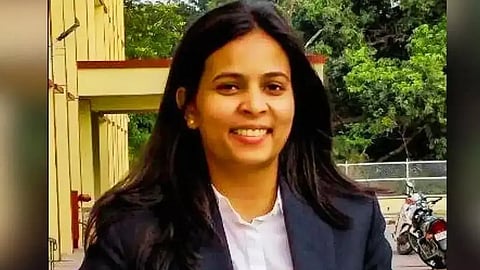
ONE UPSC STUDENT’S category change from General to EWS have raised serious concerns about how the system functions and whether the reservation is fulfilling its intended aim. IPS officer Arfa Usmani, who had earlier cleared the civil services exam under the General category in 2023, appeared in the 2025 selection list under the Economically Weaker Sections (EWS) quota. The development has set off a heated debate on social media, with many questioning how a serving IPS officer could qualify under a reservation meant for economically weaker General category families.
The controversy was reignited in public following an investigation by The Indian Express, which examined the profile of candidates selected under the EWS quota and raised concerns over whether the reservation is reaching its intended beneficiaries.
Arfa Usmani, a native of Varanasi in Uttar Pradesh, had secured All India Rank (AIR) 111 in the UPSC Civil Services Examination 2023 under the General category. She was widely reported as the daughter of a 10th-pass shopkeeper who studied at IIT-BHU before working in multinational companies in Bengaluru. After clearing the examination, she joined the Maharashtra cadre as a direct recruit IPS officer.
However, when the UPSC 2025 final results were announced, Usmani's name appeared again with AIR 124 under the EWS category. The change became the centre of discussions online, with many users and even aspirants demanding clarity over how the category switch took place. Users even alleged that she had taken away an opportunity meant for a genuinely poor EWS candidate. The screenshots comparing the 2023 and 2025 UPSC results started going viral and highlighted the change in category using annotations and her photographs.
The controversy surround Usmani's category change follows an investigative report by The Indian Express, which analysed all 104 candidates selected under the EWS category out of the 958 successful candidates in UPSC CSE 2025.
According to Shyamlal Yadav's report, nearly 64.4% of EWS candidates were admitted in top civil services coaching institutes, while at least 44.4% studied in private schools. Around 26.9% had parents running businesses and about 9.6% had earlier worked in private companies, including multinational firms.
The report also found that at least 67 candidates had studied at coaching institutes such as Vajiram & Ravi, Vajirao & Reddy and Drishti IAS, where annual fees can go up to around ₹2.65 lakh. Overall, at least 84 candidates had taken formal coaching, many from multiple institutes.
Besides this, at least 46 candidates had studied in private schools charging annual fees between ₹45,000 and ₹1.5 lakh. At least 14 successful candidates were IIT graduates, while others came from top institutions including NITs, Delhi University, and JNU.
However, the report also highlighted that the EWS quota has benefited several genuinely disadvantaged candidates, including children of a security guard, railway porter, bus conductor and small farmers from rural areas.
Former Chief Information Commissioner Satyananda Mishra told The Indian Express that issuing authorities must carry out rigorous verification instead of relying only on self-declarations and income tax records. He warned that if financially well-off families continue to obtain EWS certificates, the purpose of the reservation itself would be defeated.
The reservation for economically weaker section was introduced in 2019 through the 103rd Constitutional Amendment, providing 10% reservation to General category families meeting the stated income criteria. Families with annual income below ₹8 lakh, along with some specified asset limits, are generally eligible for the quota.
Since the controversy surfaced, many UPSC aspirants have demanded stricter scrutiny of EWS certificates and greater transparency in the verification process. Some have also called for audits of certificates and tighter rules for candidates already serving in government services who reappear in the examination. However, others have cautioned against drawing conclusions without complete official verification, noting that EWS eligibility is determined on the basis of income and assets for the relevant assessment period.
So far, neither Arfa Usmani nor UPSC has issued any official statement addressing the controversy. As debates continue online, the issue has moved beyond one candidate and reopened questions over whether the EWS quota is reaching those it was originally designed to help.
Suggested Reading:
Subscribe to our channels on YouTube and WhatsApp
Download our app on Play Store
