
- HOME
- OPINION
- ON GROUND
- INTERVIEW
- Neta Profile
- Editor's Pick
- INDIA
- NewsGram USA
- WORLD
- न्यूजग्राम
- POLITICS
- ENTERTAINMENT
- CULTURE
- LIFESTYLE
- ECONOMY
- SPORTS
- Jobs / Internships
- Misc.
- NewsGram Exclusive

Tetsuya Yamagami was sentenced to life imprisonment by the Nara District Court for fatally shooting former Prime Minister Shinzo Abe
Prosecutors said the attack was carefully planned and motivated by Yamagami’s resentment toward the Unification Church
Abe’s assassination has triggered public debate on religious influence, and highlighted rare gun violence in Japan.
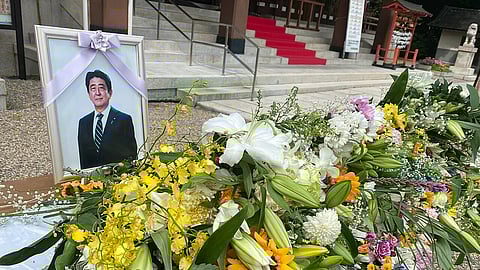
A Japanese court on Wednesday, January 21, 2026, sentenced Tetsuya Yamagami to life imprisonment for the assassination of former Prime Minister Shinzo Abe. The crime shocked Japan and the world, as the country has very few cases related to gun violence.
The verdict was delivered by Judge Shinichi Tanaka at the Nara District Court, more than three years after Abe was shot dead during a campaign speech on July 8, 2022. A crowd gathered outside the court, with many people lining up early to obtain passes to observe the proceedings.
Yamagami, 45, was convicted of murder and violations of Japan’s firearms control laws after he used a homemade gun to shoot Abe in broad daylight outside a train station in the western city of Nara. Abe, Japan’s longest-serving prime minister, was 67 at the time of his death. Yamagami was arrested at the scene moments after the attack.
At the opening of the trial, Yamagami admitted to killing Abe but contested some additional charges. Under Japan’s legal system, trials proceed even if the defendant pleads guilty. Prosecutors described the assassination as “unprecedented in post-war history” and sought a life sentence, citing the severe impact of the crime on Japanese society.
Prosecutors argued that the murder was highly premeditated, noting that Yamagami had spent months assembling and testing a lethal firearm in remote mountainous areas. They said he deliberately targeted Abe to draw attention to the Unification Church, also known as the Moonies, which Yamagami blamed for ruining his family.
During the trial, it emerged that Yamagami’s mother had made massive donations to the Unification Church, leaving the family bankrupt. According to court testimony, her contributions eventually amounted to nearly 100 million yen (about $1 million at the time).
Yamagami told investigators he believed Abe was affiliated with the Church. He said killing someone as prominent as Abe would expose the group and fuel public criticism. His lawyers sought leniency, arguing that he was a victim of “religious abuse” and requesting a prison term of no more than 20 years.
The assassination triggered widespread scrutiny of ties between the Unification Church and Japan’s ruling Liberal Democratic Party (LDP). The Church, founded in South Korea in 1954 by Sun Myung Moon, later lost its tax-exempt religious status in Japan and was ordered to dissolve. Abe’s killing also served as a wake-up call for Japan, a country with some of the strictest gun control laws in the world and extremely low levels of gun violence.
Shinzo Abe served as Prime Minister from 2006 to 2007 and again from 2012 to 2020, making him the longest-serving prime minister in Japan’s history. Despite being a divisive figure domestically, he was influential internationally and played a key role in strengthening Japan’s strategic ties, including with India and the United States.
Public reaction to Yamagami’s sentencing has been mixed. While many viewed the punishment as justified, thousands signed petitions calling for leniency, citing the severe personal hardship he endured. His case has since prompted legal reforms aimed at protecting individuals from coercive or exploitative financial practices by religious organisations.
[VP]
Suggested Reading:
Subscribe to our channels on YouTube and WhatsApp
Download our app on Play Store

