
- HOME
- OPINION
- ON GROUND
- INTERVIEW
- Neta Profile
- Editor's Pick
- INDIA
- NewsGram USA
- WORLD
- न्यूजग्राम
- POLITICS
- ENTERTAINMENT
- CULTURE
- LIFESTYLE
- ECONOMY
- SPORTS
- Jobs / Internships
- Misc.
- NewsGram Exclusive

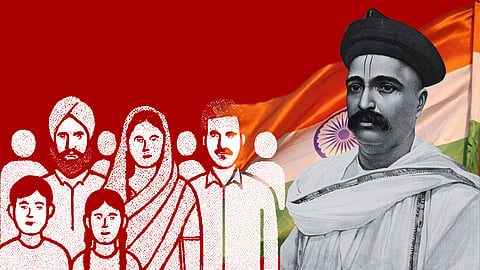
"SWARAJ IS MY BIRTHRIGHT, AND I SHALL HAVE IT." These immortal words of Lokmanya Bal Gangadhar Tilak did not merely challenge British colonial rule, they awakened a nation. Tilak's vision of Swaraj was never confined to political independence. It was a call for an India where citizens were informed, fearless, and active participants in shaping the nation's destiny.
Seventy-nine years after Independence, an uncomfortable question confronts us: Have we truly achieved the Swaraj that Tilak envisioned, or does it still remain miles away?
Political freedom was achieved in 1947, but Swaraj is much more than freedom from foreign rule. It is self-governance, accountability, public participation, and a democracy that genuinely serves its people. The Constitution begins with the words, "We, the People of India." These words place sovereignty in the hands of citizens. Yet, how often do we exercise that responsibility beyond election day?
See Also: Delhi's Health Scam Is a Wake-Up Call
Today, unemployment continues to be a pressing concern for millions of young Indians. Education, which Tilak regarded as the foundation of nation-building, faces repeated challenges from concerns over examination integrity to questions about equal opportunity. When students lose faith in the fairness of the system, the idea of Swaraj itself is weakened.
Democracy also needs honest self-reflection. Elections are important, but they alone cannot make a democracy strong. True democracy thrives when citizens actively participate, question those in power, and hold leaders accountable. Today, however, politics is often driven by party interests rather than the public good, leaving many people with little real voice in the decisions that shape their lives.
Tilak believed that people should be empowered, not just governed. Even today, many citizens do not fully realise the value of their vote. A vote is not something to be bought or sold, it is the voice of the people and the foundation of democracy. When votes are influenced by money or false promises, democracy becomes weaker.
India also needs stronger electoral and political reforms. Transparent political funding, greater accountability, and more public participation are essential to build a democracy that truly serves its citizens. Only then can the true spirit of Swaraj become a reality.
The recent controversies surrounding the Ram Mandir have also reminded us of an important democratic principle of accountability. When achievements are celebrated, leaders are quick to take credit. But when questions or controversies arise, people expect honesty, transparency, and fair investigations. Public trust is built not only through success but also through the willingness to answer difficult questions.
Tilak believed that an aware and informed public was the greatest strength of a nation. Through public festivals and his newspapers, Kesari and The Mahratta, he encouraged people to think, question, and take part in public life. He wanted citizens to be active participants, not silent spectators.
Even after more than a century, Tilak's message remains relevant. Swaraj is not just about choosing a government every five years. It is about responsible citizens who participate in democracy, ask questions, and hold those in power accountable. A strong democracy depends not only on good leaders but also on active and aware citizens.
India won political independence in 1947, but the journey towards true Swaraj is still unfinished. Unemployment, weak public participation, growing political divisions, and declining trust in institutions show that democracy still has many challenges to overcome.
Tilak said, "Swaraj is my birthright, and I shall have it." Today, the question is no longer whether Swaraj is our birthright. The real question is: Have we built the Swaraj that Tilak dreamed of? Until every citizen's voice is heard, every vote is respected, and accountability becomes a way of governance, Swaraj will remain an ideal that India must continue striving to achieve.
(Writer is the editor-in-chief of NewsGram and former President of the Bharatiya Liberal Party)
Suggested Reading:
Subscribe to our channels on YouTube and WhatsApp
Download our app on Play Store
