
- HOME
- OPINION
- ON GROUND
- INTERVIEW
- Neta Profile
- Editor's Pick
- INDIA
- NewsGram USA
- WORLD
- न्यूजग्राम
- POLITICS
- ENTERTAINMENT
- CULTURE
- LIFESTYLE
- ECONOMY
- SPORTS
- Jobs / Internships
- Misc.
- NewsGram Exclusive

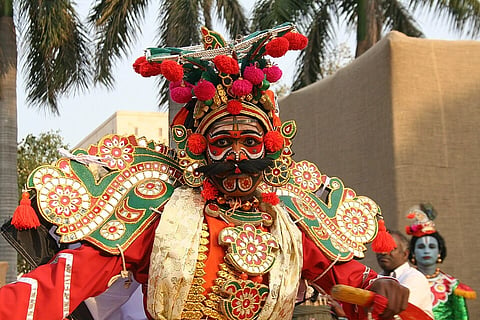
IN THE SMALL AND SLEEPY VILLAGE OF KOOVAGAM situated in the southern Indian state of Tamil Nadu, a unique celebration takes place every year. An amalgamation of faith, tradition, and identity culminates in a unique celebration — a celebration of transgender people. The community, which is often shunned and looked down upon with disdain, find themselves at the center of attention and celebration at the Koovagam Festival whicht takes place in Koovagam Village, Tamil Nadu.
The village bursts into life and bustles in the early days of chithirai — which corresponds to the month of April-May of the Gregorian calendar. The festival takes place at the Koothandavar Temple of Koovagam village, drawing devotees and revelers from across the nation and beyond.
The festival seeks to honor Aravan (also known as Irawan), a heroic and tragic figure from the Hindu epic poem Mahabharata. According to ancient texts, Aravan was the son of Pandava prince Arjuna and the Naga princess Ulupi. Aravan is widely worshiped as the god of transgenders.
In the final moments of the momentous Kurukshetra war, Aravan sacrificed himself so as to guarantee that the Pandavas could emerge victorious in the war. His sacrifice was in a bid to appease the goddess Kali, whose blessings were necessary if the Pandavas wanted to win the war.
Aravan had one condition — he wanted to be married before he died. As his death was guaranteed, no woman agreed to marry him as they didn't want to become a widow immediately. Lord Krishna transformed himself into the beautiful enchantress Mohini to wed Aravan to fulfill his last wish. As dawn approached the next morning, Aravan died, and his wife Mohini weeped in mourning. Her grief and mourning forms a core part of the celebration of Koovagam festival.
The duration of the festival — which is 18 days — commemorates the duration of the Kurukshetra war.
The 18-day-festival has two distinct rituals in place: marriage and mourning. On the 14th day of the festival, the ceremonial “marriage” takes place. Devotees marry Lord Aravan, decked in traditional wedding attire of a bride consisting of a beautiful saree, makeup, gajras, footwear, and gold jewelry. Temple priests tie the ritual yellow ‘thali’ (sacred thread) around the women’s neck and apply sindoor (vermillion) in their hair partings, symbolizing the marriage.
In addition to transwomen, believers of other faiths also ‘wed’ Lord Aravan at the festival, as it is widely believed that the wife of the deity will be endowed with blessings and their wishes would be fulfilled.
Thereafter, on the 16th day, a massive temple chariot carrying the idol of Lord Aravan is pulled through the village streets, which brings the idol to the sacrificial site. When the chariots nears its destination, the second part of the festival commences: the mourning.
Devotees who donned the bridal attire just a day prior now wear a white saree to mourn the ‘death’ of their ‘husband,’ the Lord Aravan. The symbolic ‘widowhood’ is called ‘Aravan Kalapalli’. Bangles are shattered, thalis ripped off, and sindoor is wiped from the hair partings as devotees reenact Mohini’s mourning for her dead husband. Cries, laments, and sounds of beatings of chest fill the air as the symbolic mourning takes place.
The festival concludes with a coronation ceremony, called the Dharma Pattabhishekham. This day marks the end of the pilgrimage for the transgender community.
A unique modern part of the Koovagam festival is the “Miss Koovagam Beauty Pageant.” As traditional beauty pageants go, one transwoman is crowned the “Miss Koovagam” each year. For a festival that is rooted in tradition, the beauty pageant becomes the center of attention as a way to advocate for broader inclusion, human rights, and dignity.
On the final day of the festival, transgender participants dress in their finest attire, adorn themselves beautifully, and gracefully parade through the streets. After the procession, they warmly embrace one another, bid emotional farewells, and depart with the hope of reuniting again the following year.
The Koovagam Festival stands not only as a traditional event, but also as a safe haven for the trans community. A beautiful celebration of tradition, identity, and dignity.
Suggested reading:
Subscribe to our channels on YouTube and WhatsApp
Download our app on Play Store


