
- HOME
- OPINION
- ON GROUND
- INTERVIEW
- Neta Profile
- Editor's Pick
- INDIA
- NewsGram USA
- WORLD
- न्यूजग्राम
- POLITICS
- ENTERTAINMENT
- CULTURE
- LIFESTYLE
- ECONOMY
- SPORTS
- Jobs / Internships
- Misc.
- NewsGram Exclusive

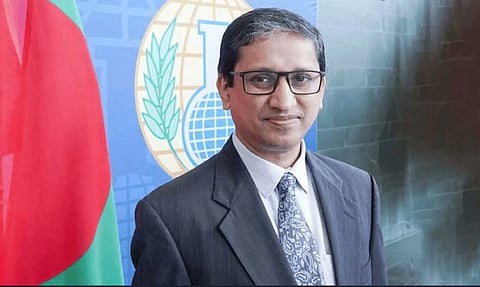
MEA summons Bangladesh’s High Commissioner to New Delhi, M Riaz Hamidullah
In the meeting they voiced concern over worsening security situation and provocative remarks by Bangladeshi leaders
New Delhi flags extremist threats to Indian mission in Dhaka and rejects ‘false narratives’
India on Wednesday, December 17, 2025, summoned Bangladesh’s High Commissioner to New Delhi, M Riaz Hamidullah, to formally lodge a diplomatic protest over security threats to the Indian High Commission in Dhaka and a rise in provocative anti-India statements by Bangladeshi political leaders.
The Ministry of External Affairs (MEA) said it conveyed India’s grave concerns to the envoy over the worsening security situation in Bangladesh, particularly following statements by extremist groups about creating unrest around the Indian diplomatic mission.
According to the MEA, the Bangladeshi envoy was informed of India’s serious concerns over plans announced by extremist elements to target or disrupt the Indian High Commission in Dhaka. India categorically rejected what it described as a “false narrative” being pushed by extremist groups in connection with recent events in Bangladesh. New Delhi also expressed disappointment that the interim government in Dhaka has neither conducted a thorough investigation nor shared credible evidence with India regarding these incidents.
India underlined that its relationship with Bangladesh is rooted in the shared legacy of the 1971 Liberation War and strengthened through development cooperation and strong people-to-people ties. Reiterating its support for peace and stability in Bangladesh, New Delhi said it has consistently called for free, fair, inclusive, and credible elections conducted in a peaceful atmosphere. India also stressed that it expects the interim government to ensure the safety of all diplomatic missions and personnel.
The diplomatic summons came amid outrage in India over inflammatory remarks made by Hasnat Abdullah, a student leader of Bangladesh’s National Citizen Party (NCP). Abdullah claimed that Dhaka could shelter separatist and anti-India forces and help sever India’s northeastern states—collectively known as the “Seven Sisters”—from the rest of the country.
He made the remarks at a protest rally in Dhaka organised by Inqilab Mancha, alleging—without evidence—that India was backing those accused in an attack on another student leader, Osman Hadi. The comments were made during Bangladesh’s Victory Day celebrations, further intensifying their diplomatic impact.
India firmly dismissed the allegations and said it expects Bangladesh’s interim government to take all necessary measures to maintain internal law and order, including ensuring a peaceful electoral process. The MEA also rejected claims by Bangladeshi leaders that anti-Bangladesh activities were being carried out from Indian territory, reiterating that India has never allowed its soil to be used for actions hostile to the Bangladeshi people.
Tensions between the two countries have increased since the collapse of the Sheikh Hasina-led government in August 2024 following student-led protests, after which Hasina fled to India. Since then, New Delhi has closely monitored developments in Bangladesh, including what it sees as a rise in radical rhetoric, attempts to undermine the legacy of the 1971 Liberation War, and shifts in Dhaka’s regional alignment.
Against this backdrop, India has stepped up border precautions, including imposing prohibitory orders in Assam’s Cachar district, citing concerns over possible cross-border movement by extremist elements.
While recent developments have strained bilateral ties, both sides have publicly reiterated the importance of cooperation, regional stability, and mutual security. India has made it clear that it will show zero tolerance for rhetoric that questions its territorial integrity or threatens its diplomatic presence.
(Edited by Dhruv Sharma)
Suggested Reading:
Subscribe to our channels on YouTube and WhatsApp
Download our app on Play Store
