
- HOME
- OPINION
- ON GROUND
- INTERVIEW
- Neta Profile
- Editor's Pick
- INDIA
- NewsGram USA
- WORLD
- न्यूजग्राम
- POLITICS
- ENTERTAINMENT
- CULTURE
- LIFESTYLE
- ECONOMY
- SPORTS
- Jobs / Internships
- Misc.
- NewsGram Exclusive

AI generated summary, newsroom-reviewed
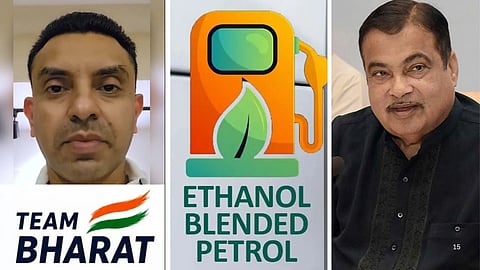
TEHSEEN POONAWALA, an entrepreneur and political commentator, is continuing to raise questions regarding the government's E20 fuel push. In his recent posts on X, Poonawal questioned the procurement costs for ethanol and petrol. While sharing the written reply of Suresh Gopi, Minister of State for Petroleum and Natural Gas, to the Rajya Sabha, Poonawala claimed that Parliament data shows ethanol is being bought at a higher price than petrol itself. Accusing the government of favouring sugar distilleries over consumers, he has launched an 'Ethanol 2.0' campaign against the policy.
Calling it the “Ethanol Scam,” Poonawalla has alleged that while ordinary Indians continue to pay over ₹100 for a litre of petrol, the government is purchasing ethanol at a price higher than the base cost of petrol itself. He based his claims on the written reply in the Rajya Sabha, saying that Oil Marketing Companies are procuring ethanol at an average price of around ₹70 per litre, whereas the base cost of petrol is around ₹52-60 per litre.
The Pune-based entrepreneur wrote on X, "We The People get Petrol that costs India ₹52/litre at ₹102/ litre while Ethanol distilleries get the damn subsidies!" He went on to describe the policy as "Beta Badhao Yojna,” alleging it benefits Nitin Gadkari and other ministers’ sons while consumers bear the burden.
The remarks have once again brought focus on the economics of India's ambitious E20 fuel programme, which the government says is one of its biggest energy security initiatives.
Poonawala’s response came after Minister of State for Petroleum and Natural Gas Suresh Gopi responded to questions in the Rajya Sabha regarding ethanol blending. In its written reply, the cabinet minister said the E20 programme was rolled out only after extensive consultations with NITI Aayog, automobile manufacturers, Oil Marketing Companies (OMCs), the Automotive Research Association of India (ARAI), and other technical bodies.
According to the Centre, India achieved 20% ethanol blending almost five years ahead of its original target of 2030. The government also highlighted what it called the programme's major achievements. It said ethanol blending has helped save over ₹1.97 lakh crore in foreign exchange by reducing crude oil imports, replaced around 316 lakh metric tonnes of crude oil, prevented nearly 952 lakh metric tonnes of carbon dioxide emissions and generated around ₹1.66 lakh crore in additional income for farmers since Ethanol Supply Year (ESY) 2014-15.
The Centre further said there have been no widespread complaints of engine failures, corrosion or vehicle performance issues because of E20 fuel, adding that concerns raised on viral social media have been scientifically examined and found to be largely unsubstantiated.
Tehseen Poonawala argues that the numbers quoted by the central government themselves raise uncomfortable questions. His main question is: if ethanol is being procured at around ₹70 per litre while petrol costs less at the refinery stage, how does blending a more expensive fuel reduce costs for consumers?
He alleges the answer lies in government support extended to ethanol producers, particularly sugar distilleries, while motorists continue paying high retail fuel prices. He also alleges that farmers get ₹3-6 per Kg for their crops, which are used to produce Ethanol worth ₹70 per litre.
In a video released on X, Poonawalla announced the launch of "Ethanol 2.0" under the banner of “Team Bharat.” He said his campaign would fight the issue on the "Sadak, Sansad aur Supreme Court (Roads, Parliament, and Supreme Court)." According to him, the protests will include public demonstrations, political outreach, and legal action challenging the ethanol policy. His video also questioned why consumers are being asked to accept higher ethanol blends when many still complain about mileage and maintenance costs.
Suggested Reading:
Subscribe to our channels on YouTube and WhatsApp
Download our app on Play Store

