
- HOME
- OPINION
- ON GROUND
- INTERVIEW
- Neta Profile
- Editor's Pick
- INDIA
- NewsGram USA
- WORLD
- न्यूजग्राम
- POLITICS
- ENTERTAINMENT
- CULTURE
- LIFESTYLE
- ECONOMY
- SPORTS
- Jobs / Internships
- Misc.
- NewsGram Exclusive

Key Points
A 22-year-old dental student, Nithin Raj R L, died after a fall on campus, with his family alleging prolonged caste-based harassment and abuse.
The college has suspended two faculty members and launched an internal inquiry, while police and the Kerala State Human Rights Commission have initiated investigations.
The incident has reignited concerns over caste discrimination and institutional failure in higher education, drawing reactions from leaders like Shashi Tharoor and Ramesh Chennithala.
In a state hailed for its model social progress, matters such as caste discrimination and violence have long been viewed as a resolved matter in the state of Kerala, or so it seems. The death of a student at Kannur Dental college has sparked fresh controversy regarding caste-based discrimination and the consequences of harassment in higher-education institutions in the state.
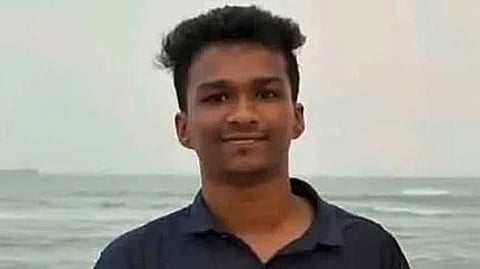
Nithin Raj R L, aged 22, was a first-year student enrolled in the Bachelor of Dental Surgery (BDS) course, hailing from Uzhamalakkal in Thiruvananthapuram. On 10th April 2026, Raj was found lying with serious injuries in the graven-led backyard of the campus after falling from a building in a seemingly suicide attempt. He was admitted to the Kannur Medical College Hospital, but unfortunately succumbed to his injuries in the afternoon around 3pm. A case of unnatural death was registered under Section 194 Bhartiya Nyaya Sanhita (BNS), and officials on Sunday, 12th April said that investigations are underway regarding allegations of sustained harassment.
Born to parents Y L Rajan and C R Latha, Nithin came from a humble background and belonged to the Scheduled Tribes (Dalit) community. Striving for a merit-based seat in the dental college, his father, a daily paint wage labourer by profession, financially supported him through four years of academic preparations after Nithin’s Plus Two. Nabbing a seat in the college last September, Nithin became the first in his family to attend a higher-education institution.
His parents have levelled serious allegations towards the faculty at the institution, citing that Nithin was periodically the target of verbal abuse, public humiliation, threats of academic failure, and was even subjected to deliberate sabotage of his internal assessment marks. The situation was further aggravated by harassment and abuse from students, all of which, according to Nithin’s family, stemmed from his background as a member of the Dalit community. Some relatives claimed that Nithin often found himself at the receiving end of racial comments, was once called a “slum dug,” and was mocked for his dark complexion, caste background and financial status. Complaints to the college authorities fell on deaf ears, they alleged, as after repeated attempts to address the issue no action was taken.
An audio recording has since gone viral after Nithin’s death, which he supposedly recorded himself, intensifying the alleged claims. In the recording, the speaker describes being insulted in the staff room, being subjected to abusive language, and hearing his mother being mocked over her surgery. He also recounts how one teacher distributed his answer sheet among classmates, pointing out spelling mistakes to mock him publicly. “I tolerated the insult as far as I could,” the voice confesses.
Addressing the issue, Principal Vinay Mony stated that an internal committee has been constituted within the college to look into this matter. However, Mony denied having received any complaints pertaining to caste based discrimination and harassment within the college campus. The college administration has also suspended two faculty members from the Department of Oral Pathology, Dr MK Ram (Head of Department) and Dr KT Sangeetha Nambiar (Reader).
The Chakkarakkal police have commenced questioning faculty members and students. Speaking to reporters, Nithin’s sister Rakhi said that the department head, Dr Ram, had threatened to lower her brother’s internal assessment marks and deliberately caused him severe stress by scheduling an exam on the same day Nithin had two others. Alleging that the hostel environment was “isolating” wherein he was treated “like a prisoner” Nithin’s family claim that that he was moved to a solitary room and contact with classmates was restricted during a bout of fever earlier.
This case has sparked major outrage in the state of Kerala, with political leaders strongly condemning the incident. Demanding an immediate probe into the matter, Congress Leader Ramesh Chennithala stated that “caste discrimination in college is concerning,” and backed Nithin’s parents claim that their son received harassment based on his caste and colour.
Expressing anguish over the incident, Senior Congress MP Shashi Tharoor wrote on X:
This is chillingly reminiscent of the death of Sidharthan, another young student from Thiruvananthapuram. I had visited his grieving family after his tragic passing. In his case, it was student goons who drove him to his end, while a callous management looked the other way. Different perpetrators, same criminal institutional failure. These are not isolated tragedies. They are symptoms of a deeply diseased campus culture — one that preys on the vulnerable and shields the powerful.
See also: DELUSIONAL TAKE: “ChatGPT Is Upper-Caste Propaganda”: UPSC Educator Dr. Vijender Chauhan
The Kerala State Human Rights Commission on Sunday, 12th April, has directed the police to conduct a detailed probe into the death of the student and submit a report within a week. Based on media reports and coverage, the commission took on the case on its own and has registered a suo moto case. Commission Judicial member K Baijunath issued directions to the Kannur City Police Commissioner to investigate the allegations surrounding the incident and file a report within the stipulated time, according to a statement.
For a state that prides itself on the highest level of literacy in the nation with a decent performance social welfare index, cases like this have become a recurring event in the state. Student suicides linked to caste, caste or institutional harassment continue to make headlines. Opposition parties and activists argue that covert casteism cases continue within the state, often shrouding itself under the guise of academic discipline or personal rivalry. First generation Dalit students, such as Nithin, find themselves in an increasingly vulnerable environment in elite professional courses wherein they are often at disadvantage.
Suggested reading:
Subscribe to our channels on YouTube and WhatsApp
Download our app on Play Store
