
- HOME
- OPINION
- ON GROUND
- INTERVIEW
- Neta Profile
- Editor's Pick
- INDIA
- NewsGram USA
- WORLD
- न्यूजग्राम
- POLITICS
- ENTERTAINMENT
- CULTURE
- LIFESTYLE
- ECONOMY
- SPORTS
- Jobs / Internships
- Misc.
- NewsGram Exclusive

AI generated summary, newsroom-reviewed
AS THE PROTESTS IN LADAKH by the Leh Apex Body (LAB) entered its second day, climate activist and LAB leader Sonam Wangchuk has made a startling allegation that he has been placed under house arrest, with dozens of police and paramilitary personnel being reportedly deployed outside his residence in Leh.
Led by Leh Apex Body (LAB) co-chairman, Cherin Dorjay, a protest is being staged at the NDS Memorial Park in Leh since Thursday, November 12, 2026, against the administration’s decision to hold the upcoming Ladakh Autonomous Hill Development Council (LAHDC) elections in December, 2026.
See Also: Leh Violence: Ladakh Activist Sonam Wangchuk Shifted to Jodhpur Central Jail
An indefinite sit-in is in session with the demands of resumption of talks with the centre, postponement of the upcoming hill council elections, withdrawal of the new liquor policy and the release of the judicial enquiry report into the September, 24, 2025, violence in Leh.
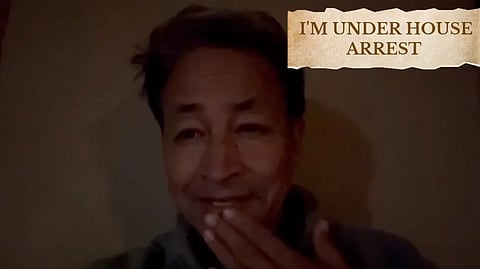
As the agitation against the administration continued, Sonam Wangchuk has brought about a startling allegation that he has been placed under house arrest following his participation in the protests. In a video message posted on social media platforms such as Instagram and X on Thursday, Wangchul claimed that dozens of armed security personnel had been deployed around his residence and institute.
In the video message posted on X, he questioned the administration’s position that he had merely been advised to remain at home in view of the prohibitory orders. He added that was prevented from leaving his residence by the police personnel, while he tried to step out of his residence, in order to check if at all he had been put under house arrest.
Adding to the situation on ground, Wangchuk alleged that restrictions have been imposed on his movements because he had questioned the delay in publishing the judicial inquiry commissions report on the September 2025 violence, and the administration's decision to conduct the hill council elections during the peak winter season.
The Ladakh administration, however, has defended the preventive restrictions, maintaining that they were imposed in accordance with the prohibitory orders issued in connection with the ongoing electoral process.
An order issued by the Additional District Magistrate (ADM) of Leh imposed restrictions on Wangchuk’s movements, prohibiting him from organizing or participating in unauthorized rallies, processions and public gatherings that could disturb public order.
The order is issued under Section 163 of the Bharatiya Nagarik Suraksha Sanhita (BNSS), 2023, and would remain in force for 60 days unless withdrawn or modified.
One of the main points of contention behind the ongoing agitation is the administration’s decision to conduct the LAHDC elections on December 4, 2026. The LAB and the Kargil Democratic Alliance (KDA) have opposed the election schedule, arguing that polls during harsh winter months could seriously affect voter turn-out.
According to the LAB, a substantial section of the population has already migrated, thereby harming the availability of voters during the elections. LAB co-chairman in his addresses claimed that, “25% people of Ladakh” have already migrated due to the extreme temperatures during the winter season.
Adding on to the Leh Apex Body, the Kargil Democratic Alliance (KDA), has also opposed the hill council elections in the weak winter season, and are demanding its postponement till May-June next year. The KDA has expressed its solidarity to the Leh Apex Body’s agitation, and is expected to carry out a candle march in Kargil on Saturday.
The protests and agitations in Ladakh did not come about recently. They are a part of the broader agitation in the region following the abrogation of Article 370 and the reorganization of Jammu and Kashmir.
On the basis of the amendments materialized in 2019, Ladakh was separated from Jammu and Kashmir, and established as a Union Territory without a legislature. While it was initially supported by various sections of the populace, things began to take a different turn once questions of political representation, employment, reservation and the cultural-environmental rights of the region began to come into discussion.
[Rh/AR]
Suggested Reading:
Subscribe to our channels on YouTube and WhatsApp
Download our app on Play Store