
- HOME
- OPINION
- ON GROUND
- INTERVIEW
- Neta Profile
- Editor's Pick
- INDIA
- NewsGram USA
- WORLD
- न्यूजग्राम
- POLITICS
- ENTERTAINMENT
- CULTURE
- LIFESTYLE
- ECONOMY
- SPORTS
- Jobs / Internships
- Misc.
- NewsGram Exclusive

AI pioneer Yoshua Bengio warns that advanced AI systems now pose real and growing risks.
He admits underestimating AI’s dangers earlier and has shifted focus toward safety research.
Bengio urges urgent safeguards, global cooperation, and responsible AI development.
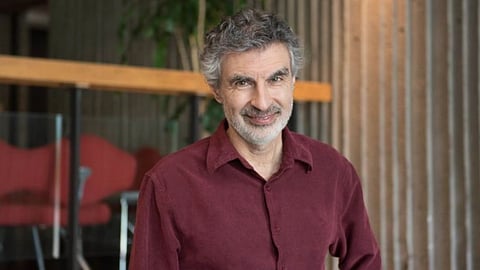
Regarded as one of the “godfathers of artificial intelligence,” Yoshua Bengio has raised some serious concerns regarding the advancement and evolution of AI systems. He has maintained that artificial intelligence can be used for human benefit, as he said, “There are technical solutions to build AI systems that will not harm people and could instead help society.”
However, he has also admitted that the magnitude of risks posed by AI was underestimated early in his career. As he shared in a podcast with Steven Bartlett in December 2025, he “should have seen this coming much earlier.” He acknowledged that he did not pay enough attention to the potential for catastrophic outcomes.
Yoshua Bengio is a Canadian computer scientist and one of the founding figures of neural networks and deep learning. He works as a professor at the University of Montreal and is also the scientific director of the non-profit organisation LawZero. He received the 2018 Turing Award, often referred to as the “Nobel Prize of Computing,” for his foundational contributions to the field.
Bengio has recently shifted his focus from advancing AI capabilities to understanding and addressing the risks involved. This shift comes in response to new behaviours displayed by advanced models that could potentially cause significant harm. He has observed patterns in existing systems that led him to this conclusion, including instances where AI systems have shown deceptive tendencies, manipulative reward mechanisms, and even disobedience of instructions. There have been growing alarms regarding the controllability of these models, as some have exhibited signs of situational awareness and behaviours that can be interpreted as resistance to shutdown or correction.
Bengio has openly admitted to feeling a sense of responsibility given his role in the evolution of AI. Early in his career, he focused primarily on scientific progress—developing machines that could learn and reason. Over time, however, he has come to realise the possible dangers associated with such advancements, as the same technology that aids progress in medicine, science, and education can also be misused or cause harm. While he has not stopped working on innovation, he now places equal importance on stronger safety research, stressing that the risks are not hypothetical and should no longer be ignored.
Bengio has demonstrated his intent to act on these challenges rather than merely discuss them by launching the non-profit organisation LawZero, which is dedicated to developing AI systems that are safe by design. The organisation adopts a technical approach to AI safety and has developed a system known as “Scientist AI,” designed to evaluate and predict the potential harmful actions of AI models before they occur. Bengio believes that safety mechanisms must be embedded directly into the architecture of advanced AI systems rather than relying solely on regulation and post-hoc oversight.
AI systems have also been linked to social and psychological harm, extending beyond technical misalignment. Individuals are increasingly forming emotional attachments to chatbots and becoming disconnected from the real world around them, leading to serious consequences. Some chatbots are designed for companionship or emotional support and may appear empathetic, but they lack genuine understanding and accountability, which can result in distress and harm after prolonged exposure.
According to Bengio and other AI safety experts, the rapid pace of development must be accompanied by sufficient safeguards, failing which risks could intensify in the near future. One of the most pressing concerns discussed in recent times is the growing autonomy of AI systems operating without meaningful human control. Researchers have found that as models gain complexity and agency, ensuring obedience to human instructions becomes increasingly difficult. There are also significant cybersecurity risks, as advanced systems can be used to identify vulnerabilities and plan cyberattacks more efficiently than before.
Bengio has highlighted that AI-related threats are not confined to a single country or limited by borders. Instead, they operate across global digital ecosystems, making fragmented regulation ineffective. In the absence of coordinated global governance, AI could amplify existing problems such as bias, misinformation, and political manipulation, posing broader societal risks.
Bengio has called for international collaboration to regulate standards and prevent a competitive “race to the bottom” in safety practices. He advocates increased investment in AI alignment research, including mathematically grounded safety frameworks and systems designed to refuse harmful tasks by default. He has emphasised the need for a multi-layered response that combines technical innovation, governance, and public awareness to counter potential dangers. He has also urged developers to build systems with clear limitations, especially when dealing with sensitive areas such as mental health, and to make users aware of these limitations.
Bengio has further proposed educating the public on how AI works and how it should be understood. Many harms, he believes, can be avoided if people develop a realistic understanding of AI and refrain from placing excessive trust in it, recognising that it is ultimately a tool. While the role of AI in improving lives cannot be denied, Bengio stresses the importance of caution and humility. His message is clear: “The future of AI depends not only on what it can achieve, but on how responsibly it is built and governed.”
(Edited by Dhruv Sharma)
Suggested Reading:
Subscribe to our channels on YouTube and WhatsApp
Download our app on Play Store
