
- HOME
- OPINION
- ON GROUND
- INTERVIEW
- Neta Profile
- Editor's Pick
- INDIA
- NewsGram USA
- WORLD
- न्यूजग्राम
- POLITICS
- ENTERTAINMENT
- CULTURE
- LIFESTYLE
- ECONOMY
- SPORTS
- Jobs / Internships
- Misc.
- NewsGram Exclusive

Key Points:
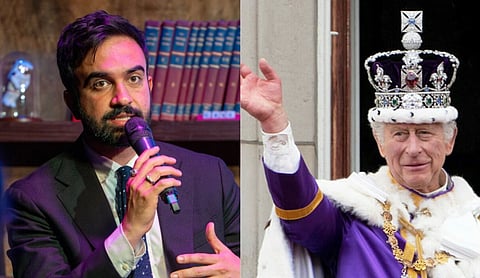
NYC Mayor Zohran Mamdani spoke about the Koh-i-Noor during a press conference hours before the ceremony to commemorate the victims of the September 11 attacks.
He said that if he gets to meet King Charles III, he will ask him to return the diamond.
India has sought to reclaim the diamond previously, but the UK has repeatedly rejected the demand, stating that it has legal authority over the prestigious gem.
Koh-i-Noor, the world's most famous diamond and one of the largest cut diamonds, has once again made headlines. With deep cultural and historical significance for India, the demand for the Koh-i-Noor to be returned has been a longstanding subject of debate for decades.
Currently, the irreplaceable diamond, which originated from the Kollur Mine in present-day Andhra Pradesh, India, is set in the crown of Queen Elizabeth The Queen Mother.
On 29 April 2026, New York City Mayor Zohran Mamdani raised the matter once again during a press conference, saying that if he were given an opportunity to speak with King Charles III, he would encourage him to return the Koh-i-Noor diamond.
He said, “If I were to speak to the king separately, I would probably encourage him to return the Koh-i-Noor diamond.” He addressed the issue ahead of a ceremony to commemorate the victims of the September 11 attacks.
Later, neither Buckingham Palace nor the mayor’s office commented on whether Mamdani had raised the matter with the King. The King commemorated the victims of the deadly 2001 attack by laying a bouquet at the memorial site where the World Trade Center once stood.
India’s demand for the return of the Koh-i-Noor has long been a subject of debate, with the Indian government reiterating its intention to reclaim the 105-carat diamond, which was gifted to the East India Company in the 19th century. These demands have consistently been rejected by the British government, which claims legal ownership of the diamond.
Long before the British laid their hands on the prestigious diamond, it had already been passed down among various rulers in India. Although its exact origin has still not been verified, some claim that Alauddin Khalji, the Sultan of Delhi in the 13th century, found a huge diamond when he invaded South India.
The diamond was later passed down to different rulers; even Babur got his hands on it in the 16th century as a gift after he won the Battle of Panipat.
Years later, the Koh-i-Noor ended up in the hands of Queen Victoria after the Second Anglo-Sikh War concluded in 1849. After the Sikh Empire was defeated, the East India Company annexed the region, and a treaty was signed that resulted in the Koh-i-Noor being handed over to the Queen and the Company.
With years of history and ongoing disputes over its ownership, the Koh-i-Noor diamond remains a timeless relic that reflects a significant part of world history.
[VS]
Suggested Reading:
Subscribe to our channels on YouTube and WhatsApp
Download our app on Play Store


