
- HOME
- OPINION
- ON GROUND
- INTERVIEW
- Neta Profile
- Editor's Pick
- INDIA
- NewsGram USA
- WORLD
- न्यूजग्राम
- POLITICS
- ENTERTAINMENT
- CULTURE
- LIFESTYLE
- ECONOMY
- SPORTS
- Jobs / Internships
- Misc.
- NewsGram Exclusive

AI generated summary, newsroom-reviewed
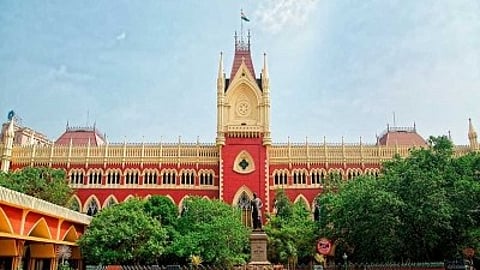
On March 31, 2026, the Calcutta High Court dismissed two PILs filed by the ruling Trinamool Congress challenging the Election Commission of India. The PILs questioned the large-scale transfer of IAS, IPS, and other officers in West Bengal ahead of the Assembly elections 2026 scheduled for April 23 and 29, 2026. The case was argued by Kalyan Banerjee, a TMC Lok Sabha MP and advocate, on behalf of the petitioner Arka Kumar Nag.
Among the two PILs registered, one challenged the transfer of top officials like the Chief Secretary, Home Secretary, DGP, and Police Commissioner, while the other focused on lower-level officers, including District Magistrates, returning officers, and police inspectors.
A division bench of the Calcutta High Court, comprising Chief Justice Sujoy Paul and Justice Partha Sarathi Sen, ruled that the Election Commission has full power to transfer officers during elections under the Model Code of Conduct to ensure free and fair polls.
The court rejected claims that the transfers would damage administration, saying replacement officers had already been appointed. “As such there is no vacuum created in the system or in the administrative arena. The contention of Shri Naidu, learned senior counsel for the E.C.I. that in place of Chief Secretary and Home Secretary, officers who are 1 and 7 years senior to them respectively were posted, was not disputed by petitioner and the State.” It clearly stated that no administrative vacuum or “numb” situation was created, and the government would continue functioning normally.
The petitioner argued that such large-scale transfers were unfair and not done in other poll-bound states, and that they weakened governance and development work. “Five States are going to elections, they can take from 18 remaining States. If head of institutions is sent, what is happening to development in State,” Kalyan Banerjee said. He said that while the Election Commission of India has the power to supervise elections, the real question is whether it can use that power unfairly. “the question is whether the ECI can act arbitrarily, whether ECI is bound by rule of law, whether it can destroy federal structural, when elected government is there,” He said.
Banerjee also questioned the process of assessment of officers who were transferred. "It has to be objective assessment( before transfer). Within one day, it has been assessed? Because he enjoys power? Experienced persons with impeccable record. ECI says 'go'. What assessment have you made?"
However, the court said there was no evidence of arbitrariness, mala fide intent, or harm to public interest. “If officers are transferred for a short time i.e. till election, it cannot be said that administrative machinery in the State is paralysed and a numb like situation has been created,” the court said. It added that similar or even larger transfers have taken place across India during elections, so West Bengal was not being treated differently.
The bench also said that a PIL cannot be filed against transfers unless there is clear public injury. It noted that the transferred officers had already been replaced, so public interest was not harmed, adding that “there is no vacuum created in the system or in the administrative arena.” Since transfers are a normal part of service and temporary during elections, they do not automatically harm governance.
The court also refused to examine allegations related to impeachment proceedings against Chief Election Commissioner Gyanesh Kumar, stating there was no clear link between those claims and the transfers.
The petitioner had also alleged that the Election Commission removed many senior IAS and IPS officers and sent some West Bengal officers to other states like Tamil Nadu, Kerala, and Nagaland as election observers. The court said this does not prove misuse of power and added that no grievance against transfer of officers should be raised unless it results in harm to public interest.
The court finally clarified that individual officers can still challenge their transfers legally, but such matters cannot be raised as a public interest litigation without strong proof of public harm.
(Edited by Dhruv Sharma)
Suggested Reading:
Subscribe to our channels on YouTube and WhatsApp
Download our app on Play Store
