
- HOME
- OPINION
- ON GROUND
- INTERVIEW
- Neta Profile
- Editor's Pick
- INDIA
- NewsGram USA
- WORLD
- न्यूजग्राम
- POLITICS
- ENTERTAINMENT
- CULTURE
- LIFESTYLE
- ECONOMY
- SPORTS
- Jobs / Internships
- Misc.
- NewsGram Exclusive

AI generated summary, newsroom-reviewed
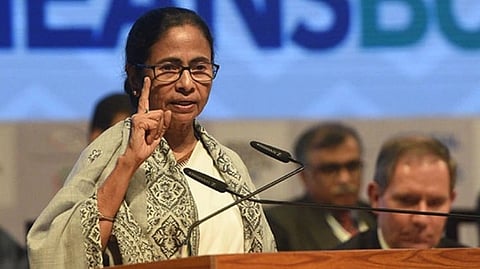
Mamata Banerjee is one of the most prominent figures in the politics of West Bengal. She became the first female Chief Minister of the state in 2011 and has been in power since then, serving three consecutive terms. She is the founder and president of the All India Trinamool Congress (TMC) and has previously served as a Union Cabinet Minister. Popularly known as “Didi,” she is recognized for her simple lifestyle and trademark white cotton saree.
The political landscape of West Bengal remains highly charged, with frequent allegations, political confrontations, and intense campaigning. As the state heads toward one of the most anticipated elections, the atmosphere is marked by rivalry among major parties.
The Election Commission of India announced the schedule for five upcoming elections, including West Bengal, on March 15, 2026. Polling in the state is scheduled for April 23 and April 29, 2026, while the counting of votes will take place on May 4, 2026. The election environment continues to remain tense, with reports of political clashes, targeted attacks, and aggressive campaign strategies.
Mamata Banerjee was born on January 5, 1955, in Kolkata to a Bengali Hindu Brahmin family. She is the daughter of Promileswar Banerjee and Gayatri Banerjee. She completed her education in Kolkata and began her political career there. She has a strong academic background, holding a Bachelor’s degree in History, a Master’s degree in Islamic History, a Bachelor of Education (B.Ed), and a law degree (LLB), all from institutions in Kolkata.
Her political career began at the age of 15 while she was studying at Jogamaya Devi College, where she established the student wing of the Congress and became actively involved in its working committee. She rose steadily within the party, serving as General Secretary of the West Bengal Mahila Congress and later as Secretary of the South Kolkata District Congress.
She gained national prominence in 1984 when she defeated CPI(M) veteran Somnath Chatterjee from the Jadavpur constituency. Known for her strong oratory skills, she emerged as a key political figure.
On January 1, 1998, she founded the All India Trinamool Congress, marking a major shift in the state’s political landscape. Her biggest political breakthrough came in 2011 when she led TMC to victory in the West Bengal Assembly elections.
She has since served three consecutive terms as Chief Minister and is currently in office following her 2021 victory. In the 2026 Assembly elections, she is contesting from the Bhabanipur constituency in Kolkata, her political stronghold. Her support base includes women, minority communities, particularly Muslims, the Matua community, and rural voters.
The governance model under Mamata Banerjee has focused largely on welfare-oriented policies, including women’s empowerment, rural development, and direct-benefit schemes. Her government promotes a development-driven approach with emphasis on grassroots outreach. However, some of her recent remarks on certain issues have attracted criticism and placed her under scrutiny.
Mamata Banerjee has been involved in several controversies throughout her political career, ranging from policy disputes and protests to allegations of corruption and confrontations with central agencies. Her tenure has been marked by frequent clashes with the central government, often framed around issues of federalism and the role of investigative agencies.
She has had repeated confrontations with agencies such as the Central Bureau of Investigation (CBI) and the Enforcement Directorate (ED). In November 2018, the West Bengal government withdrew general consent for the CBI, meaning the agency cannot initiate new investigations in the state without prior approval from the state government.
In 2019, Mamata Banerjee staged an overnight dharna in Kolkata after officials from the Central Bureau of Investigation (CBI) attempted to question then Police Commissioner Rajeev Kumar in connection with an ongoing probe. During the protest, she described her agitation as an effort to “save democracy, the Constitution, and the country,” and termed the situation a “total constitutional breakdown.”
Her tenure has also been associated with controversies such as the Saradha chit fund scam and the Narada sting operation, in which several senior leaders of the All India Trinamool Congress were involved.
Banerjee has also raised concerns about the role of the Election Commission of India (ECI), alleging that it has acted under pressure in certain instances. Referring to alleged voter roll deletions, she described the issue as a “murder of democracy,” warning of public backlash and claiming that names were being removed in a targeted manner.
Opposition parties, including the Bharatiya Janata Party (BJP), have frequently accused the government led by Mamata Banerjee of political violence and irregularities in governance.
Some of her public remarks during protests have also drawn criticism from opposition leaders, who have described them as controversial and polarising. In addition, critics have accused her of centralized decision-making and fostering a leadership style with limited internal party democracy. Allegations of vote-bank politics, particularly with regard to minority communities, have also been raised by her political opponents, though these claims have been denied by her party.
Her primary political rival is Suvendu Adhikari, who serves as the Leader of Opposition in the West Bengal Assembly. A former TMC leader and minister in Banerjee’s cabinet, Adhikari joined the BJP in 2020. He defeated Banerjee in the Nandigram constituency during the 2021 Assembly elections, emerging as a key challenger. The rivalry between the two leaders is expected to remain central to the 2026 West Bengal Assembly elections, particularly as Banerjee contests from her stronghold, Bhabanipur.
Suggested Reading:
Subscribe to our channels on YouTube and WhatsApp
Download our app on Play Store

