
- HOME
- OPINION
- ON GROUND
- INTERVIEW
- Neta Profile
- Editor's Pick
- INDIA
- NewsGram USA
- WORLD
- न्यूजग्राम
- POLITICS
- ENTERTAINMENT
- CULTURE
- LIFESTYLE
- ECONOMY
- SPORTS
- Jobs / Internships
- Misc.
- NewsGram Exclusive
This article was originally published in Radio Free Europe/Radio Liberty (RFE/RL). Read the original article.
By Alex Raufoglu
WASHINGTON -- After more than three months of conflict that has shaken the Middle East, disrupted energy markets, and heightened concerns about regional stability, the United States and Iran appear to be moving closer to a possible peace agreement.
Amid intensive diplomatic efforts brokered by Pakistan, officials in Washington, Tehran, and Islamabad indicated on June 12 that negotiations on a preliminary Memorandum of Understanding (MoU) had made significant progress.
The proposed agreement would focus on immediate de-escalation measures, including reopening the Strait of Hormuz, ending the US naval blockade of Iranian ports, and securing a commitment from Tehran not to develop or acquire nuclear weapons.
If signed, the MoU would open a 60-day period of technical negotiations aimed at addressing broader issues.
Analysts say the apparent progress reflects a shift in Washington’s negotiating strategy, with officials separating immediate security concerns from longer-term disputes.
Azeem Ibrahim, director of special initiatives at the Washington-based New Lines Institute for Strategy and Policy, told RFE/RL that this sequencing has increased the prospects for a near-term agreement.
“What appears significant is that the Trump administration has effectively broken the negotiations into separate, more manageable tracks rather than attempting to resolve every issue at once,” Ibrahim said.
“The immediate priority seems to be securing the reopening of the Strait of Hormuz and restoring freedom of navigation, which would quickly relieve pressure on global energy markets and reduce the risk of a wider economic shock.”
See also: Trump Loyalist Ken Paxton—Dubbed ‘Most Corrupt Politician in America’—Wins Texas Senate Primary
At the same time, Ibrahim cautioned that more difficult questions remain unresolved.
“More difficult issues, particularly the future of Iran’s uranium enrichment program, verification mechanisms, and long-term nuclear restrictions, are being deferred to a later phase,” he said.
“The fighting may be ending, but negotiating the full architecture of a lasting settlement is likely to take considerably longer.”
European officials have also urged both sides to build on the momentum.
French Foreign Minister Jean-Noel Barrot, following a phone call with Iranian Foreign Minister Abbas Araqchi on June 12, called on both sides to pursue diplomacy, describing the current situation as unsustainable.
Despite signs of progress, significant political and technical hurdles remain.
Uncertainty increased after Iranian state media published what it said was a draft of the proposed agreement. The text included provisions, including a reported request for $300 billion in US reconstruction assistance.
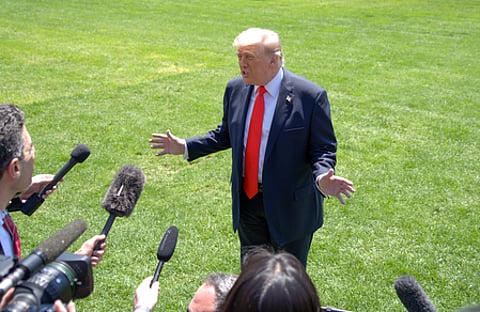
President Donald Trump rejected the leaked text, writing on social media that the published terms “have NOTHING to do with the terms that were agreed to.”
Lawmakers in Washington have emphasized that any final agreement would require strict verification measures.
Republican Congressman Ryan Zinke of Montana told reporters that the administration remained focused on three priorities: preventing Iran from obtaining nuclear weapons, restricting nuclear material, and ensuring freedom of navigation in the Strait of Hormuz.
“The devil again is in the details of how that specific agreement is going to be executed,” Zinke said. “How is verification going to take place? Who is going to be the verifying body?”
Republican Senator Ron Johnson of Wisconsin also expressed skepticism about Iran’s intentions, calling a nuclear-armed Iran a serious threat.
Meanwhile, Richard Goldberg, a former Trump National Security Council official, told RFE/RL on June 12 that Washington must not take its foot off the economic gas pedal during the upcoming 60-day technical talks.
“The key here is to minimize benefit to the regime, find ways to keep squeezing during ongoing talks and maximize support for the people," Goldberg said. "That's how we will achieve all our objectives and, ultimately, deliver a better future without this evil regime threatening the world.”
By late June 12, questions remained over how the agreement would be formalized.
A senior White House official said mediators were still considering an in-person signing ceremony in Europe in the coming days.
Trump has suggested that Vice President JD Vance could attend a signing ceremony. His office did not immediately respond to requests for comment.
But Iranian officials offered a different account. Speaking on state television, Araqchi said the initial MoU would be signed remotely using digital signatures.
“As soon as the final stages of our negotiations are completed, this agreement will be signed and announced,” Araqchi said. “The signing will initially take place digitally. Each side will sign remotely.”
Regional analysts cautioned that even if an agreement is reached, its durability remains uncertain.
Ian Ralby, head of the maritime security firm Auxilium Worldwide, said the scale of recent hostilities underscored the fragility of any truce.
“It’s very hard to trust that the situation is at the end, especially given the level of hostilities that we have seen between the parties this week,” Ralby told RFE/RL, citing strikes inside Iran and across Gulf states including Kuwait, Iraq, Bahrain, and Jordan.
Yet, as Pakistani Prime Minister Shehbaz Sharif slammed what he called an "incessant misinformation campaign" aimed at sabotaging the text, the world is left waiting on the next turn of the diplomatic wheel.
“We can all be hopeful," Ralby balanced. "Because at this point, I think everybody's looking to find some glimmer of hope amid an otherwise very sad, very difficult, and very costly situation.”
Copyright (c)2025 RFE/RL, Inc. Used with the permission of Radio Free Europe/Radio Liberty
[VS]
Suggested Reading:
Subscribe to our channels on YouTube and WhatsApp
Download our app on Play Store

