
- HOME
- OPINION
- ON GROUND
- INTERVIEW
- Neta Profile
- Editor's Pick
- INDIA
- NewsGram USA
- WORLD
- न्यूजग्राम
- POLITICS
- ENTERTAINMENT
- CULTURE
- LIFESTYLE
- ECONOMY
- SPORTS
- Jobs / Internships
- Misc.
- NewsGram Exclusive
This article was originally published in The Conversation. Read the original article.
The Israeli election of Oct. 27, 2026, was among the most highly anticipated votes in the country’s history. It was consequential, if not yet conclusive.
With nearly all the votes counted, it is still unclear who will lead the country following the first national ballot since the Oct. 7, 2023, Hamas-led attack, and the devastating wars in Gaza, Lebanon and Iran that Israel has launched since.
The Conversation turned to Dov Waxman, an expert on Israeli politics at the University of California, Los Angeles, to walk us through the main takeaways and the process and difficulties facing anyone trying to form a coalition government following a divided vote.
The first thing to note is simply the massive turnout – with a 77.7% turnout of those eligible voting, the highest turnout in more than two decades. That in itself is significant. It underscores how much importance Israelis attached to this vote.
Before the election, many observers were saying that it was one of the most consequential – if not the most consequential – votes, and clearly many Israelis felt the same way.
What drove this high turnout was different types of fears. Israelis of all persuasions were worried about how the outcome would affect what kind of country Israel becomes.
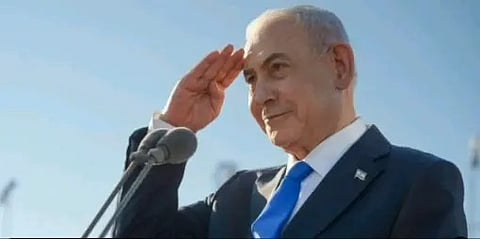
The second big takeaway is that the ruling coalition, formed by Prime Minister Benjamin Netanyahu after the 2022 election, was resoundingly rejected by the majority of Israeli voters – well over 50% cast their vote for parties opposed to the current government.
The five parties that make up Netanyahu’s right-wing and religious coalition went into the election with 68 seats in the 120-seat parliament. That same bloc will now have 53 – and that is a significant loss, no matter how Netanyahu tries to spin this as a victory.
It means that those five parties will not be able to form the next government, and as such, the vote stands as a repudiation of the Netanyahu government.
Netanyahu’s Likud party will still be the largest in parliament. But its share of the national vote declined, and it looks like it will have six fewer seats in the next parliament, another blow to Netanyahu.
Netanyahu’s far-right coalition partners fared worse than expected, too. In part, this was due to “wasted votes” going to a new far-right party that failed to make it above the 3.25% of the national vote needed to be represented in parliament. Also, Likud drew some voters away from these far-right parties who had voted for them in the last election.
The performance of the Arab majority parties – the more secular and left-wing Joint List and the more religious and conservative United Arab List – is very important.
Combined, they currently look to have increased their representation by nine seats, bringing their total to 19, a historic high for them.
The reason for that is the massive turnout of Arab voters – much higher than the last election. But also, a less noticed trend is the increase in Jewish votes that those parties received. It is important to note that these are Arab-majority parties, not simply Arab parties.
Aside from Netanyahu, it was also a disappointing result for the main opposition party, Yashar; its leader, Gadi Eisenkot; and the anti-Netanyahu Change Bloc it was part of. The preelection polls suggested that the Zionist opposition bloc would do slightly better than the ruling coalition bloc.
But Yashar ended up with over 200,000 fewer votes than Likud, winning a projected 21 seats compared to Likud’s 26, and the “Change Bloc” is heading to 48 seats, far short of a parliamentary majority.
Ultimately, what is clear is that the Israeli public remains deeply divided. And the fact that there is still a good chance that Netanyahu will emerge as prime minister is remarkable given that many observers had already written his political obituary after the Oct. 7 attack.
Certainly many saw this as a referendum on Netanyahu, Israel’s longest-serving prime minister.
For his supporters, Netanyahu is the only person to be trusted with Israel’s security, especially given the threat from Iran. They credit him for weakening – albeit not defeating – the two non-state actors that most threaten Israeli security, Hezbollah and Hamas, and they praise him for ensuring President Donald Trump’s support for Israel.
But for those who voted against Netanyahu, the fact that he has refused to take any personal responsibility for the Oct. 7 security failure – amid reports that he had advance warning of a major planned Hamas attack – factored into his poor election showing, as did his government’s refusal to establish a state commission of inquiry to investigate the Oct. 7 security failings.
Many also blame Netanyahu for not prioritizing the release of the Israeli hostages held in Gaza and prolonging the war there. He is also held responsible by many for the precipitous decline in Israel’s international standing and for jeopardizing Israel’s crucial alliance with the United States.
But it was domestic issues, rather than external ones, that motivated many of those who voted for anti-Netanyahu parties. Many fear that democracy in Israel is under attack, and they particularly oppose the effort by Netanyahu’s government to weaken the power and independence of the Israeli judiciary, which sparked massive street protests in 2023. They also strongly resent that Netanyahu’s government has allowed ultra-Orthodox men to avoid military service, despite the Israeli military’s growing manpower shortage. And on a personal level, Netanyahu is widely perceived as self-serving and dishonest – he is still on trial for corruption.
Arab voters have other, more specific concerns that drove them to vote in record numbers, in addition to the Netanyahu government’s policies in Gaza and the West Bank, which they strongly oppose. Chief among them is the soaring rates of violent crime in their communities, which the government – particularly the far-right Itamar Ben-Gvir, who oversees the police – has done nothing to address, say his critics. More broadly, many Palestinian-Arab citizens of Israel fear that if the far-right parties remained in power, their civil rights would be under threat.
The key thing to underline is what happens on election day in Israel is just the first stage in the process of forming a new government. Since no party ever receives a majority of seats in the parliament, what really matters is what happens after the election when the coalition building begins. This can take weeks, if not longer.
The party with the largest number of seats typically gets the first chance to assemble a governing coalition, but not always. Israel’s president, Isaac Herzog, will choose who gets the first chance to form a government based on who is most likely to succeed.
Right now, it looks like Eisenkot will get the first opportunity, but his only real option is to form a minority government that would depend on the parliamentary support of the Arab-majority parties – which some members of his Change Bloc adamantly oppose.
Despite the success of the Arab-majority parties in the election, it is unlikely they will be invited to be formal members of any coalition – although that has happened once in the past, when the United Arab List joined the short-lived government of 2021-22 led by Naftali Bennett and Yair Lapid.
If Eisenkot is unable to form a government, then Netanyahu will get the chance. He could try to entice some leaders of the parties in the Change bloc to defect and join a right-wing government under his leadership, or a broader “national unity” government with a rotating leader. Netanyahu did that in the past with Benny Gantz, but then he later prevented Gantz from becoming prime minister – so I doubt Eisenkot would agree to do this with Netanyahu.
There are reports in the media that the Trump administration would like a national unity government in Israel, so that might increase the pressure on Eisenkot to accept this outcome. And should war with Iran heat up again, that would increase the pressure.
The most likely scenario, I believe, is that neither Netanyahu nor Eisenkot will be able to form a government, and a new election will be called, with Netanyahu as caretaker prime minister until that vote. Netanyahu has reason to hope that his bloc will do better in another election, so that may well be his game plan. In which case, it will be many months until Israel has a new government.
[Wc/GS]
Suggested Reading:
Subscribe to our channels on YouTube and WhatsApp
Download our app on Play Store
