
- HOME
- OPINION
- ON GROUND
- INTERVIEW
- Neta Profile
- Editor's Pick
- INDIA
- NewsGram USA
- WORLD
- न्यूजग्राम
- POLITICS
- ENTERTAINMENT
- CULTURE
- LIFESTYLE
- ECONOMY
- SPORTS
- Jobs / Internships
- Misc.
- NewsGram Exclusive

AI generated summary, newsroom-reviewed
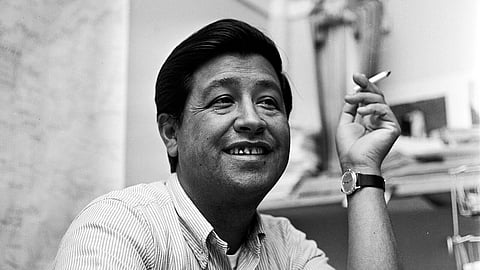
Farm union activist Cesar Chavez is a much revered figure among latino and farming communities in America. Famed for being a pioneering Mexican-American labor leader and civil rights activist, he dedicated his life to improving the wages, working conditions, and dignity of migrant farmworkers in the United States.
Such were the contributions of this man that many states including California, Utah, Arizona, and Colorado dedicate 31st march as ‘Cesar Chavez day’ each year, in a bid to commemorate the man’s life and work. People are urged to regard this day with appropriate service, community, and educational programs to honor Chavez's enduring legacy.
Once a revered figure, his name now has become more of a stain with the recent allegations comingforth against him. Recently, a New York Times investigation has revealed that Cesar Chavez indulged in sexual abuse and assault of women he once associated with.
Chavez’s life's work focused on improving wages, working conditions, and dignity for migrant farmworkers in the United States. His work helped raise awareness of farmworker struggles beyond the United States. He also helped found the United Farm Workers (UFW), a labour union for farm workers, in 1962 by bringing together farmworkers and small unions.
He emphasized nonviolent resistance, drawing inspiration from Mahatma Gandhi and Martin Luther King Jr., and combined union organizing with Catholic social teaching and Chicano cultural identity.
However, the mask he donned behind the scenes of his activism career is far more nefarious.
A New York Times investigation published in March 2026 has cast a long shadow over his legacy. Reporters uncovered extensive evidence and testimonies alleging that Chavez engaged in grooming and sexual abuse of women and girls within the farmworker movement.
Two women, Ana Murguía and Debra Rojas, now in their 60s, have come forward and alleged that Chavez sexually abused them over several years beginning in the early 1970s, when they were 12 and 13 years old. Both were daughters of United Farm Workers (UFW) organizers, and they describe an ongoing pattern of grooming and exploitation that they say left them with lasting mental‑health struggles, including depression, panic attacks, and substance use issues.
See also: Epstein Island: Black Hole of Depravity
At least a dozen other women have reportedly told NYT investigators that they, too, were harassed or mistreated by Chávez.. Many of the alleged incidents occurred while Chávez was in his 40s and serving as president of the UFW, a time when his public image was that of a saintly civil rights activist.
Perhaps the most striking allegation comes from Dolores Huerta, Chavez’s co‑founder in the National Farm Workers’ Association (which later came to be known as United Farm Workers), and one of the most prominent Latina civil rights leaders in U.S. history. Huerta has publicly stated that Chavez sexually assaulted her on two separate occasions, once coercing her into sex and once raping her. She also said that both incidents led to pregnancy, that she had to conceal for fear of tarnishing the image of the man and the movement.
In the wake of the report, California officials and advocacy groups have begun to reconsider how Chavez is commemorated. California Governor Gavin Newsom has expressed support for renaming Cesar Chavez Day as “Farmworkers Day,” severing the official holiday from Chavez’s personal name while still honoring the broader farmworker movement. Some school districts and unions have also canceled or reworked events planned for March 31.
Cesar Chavez is remembered as a powerful leader who transformed the lives of farmworkers through nonviolent struggle and deep moral language. His movement gave a voice to people who had long been invisible and exploited, making him a hero for many in the Latino community.
Chavez’s public persona was built on discipline, sacrifice, and religious morality. People had long seen him as a principled, almost saint‑like figure, which made his alleged private actions seem deeply hypocritical. The accusations force a painful question: how can someone who fought so publicly for justice and dignity also be accused of harming vulnerable women and girls? That clash between his celebrated public legacy and the serious private allegations is why the revelations have caused such a strong reaction, even decades after his death.
Cesar Chavez died in 1993, long before the current wave of sexual abuse allegations against him became public, which means he never faced these accusations in court or in life.
The recent revelations add a bitter note to his legacy, forcing communities and institutions that once revered him as an untouchable civil‑rights icon to confront the possibility that the same man who led farmworkers to liberty may also have inflicted serious harm on women and girls close to the movement.
Suggested reading:
Subscribe to our channels on YouTube and WhatsApp
Download our app on Play Store


