
- HOME
- OPINION
- ON GROUND
- INTERVIEW
- Neta Profile
- Editor's Pick
- INDIA
- NewsGram USA
- WORLD
- न्यूजग्राम
- POLITICS
- ENTERTAINMENT
- CULTURE
- LIFESTYLE
- ECONOMY
- SPORTS
- Jobs / Internships
- Misc.
- NewsGram Exclusive

The Promotion of Equity in Higher Education Institutions Regulations, 2026, has sparked student protests over fears of misuse and surveillance
Bareilly City Magistrate Alankar Agnihotri and BJP Yuva Morcha leader Raju Pandit resigned, calling the regulations a “black law”
The law follows the Supreme Court directions which asked the commission to submit updated anti-discrimination rules
The University Grants Commission’s newly notified Promotion of Equity in Higher Education Institutions Regulations, 2026, issued on January 13, 2026, has sparked protests across university campuses and triggered resignations within administrative and political circles. The introduction of these new rules has turned what was intended as a regulatory reform into a nationwide political flashpoint.
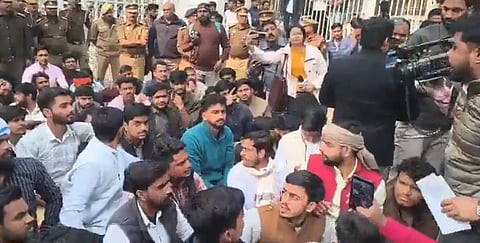
On Tuesday, January 27, 2026, students from upper-caste communities called for a protest outside the UGC headquarters in Delhi, warning that the new regulations could create chaos on campuses. The protest comes amid widespread debate over the new UGC rules, which have drawn strong reactions from students, teachers, and social groups.
According to messages circulating on social media, the protest is planned as a peaceful gherao of the UGC office. The organisers have appealed for unity among students, urging them to gather in large numbers to oppose the regulations.
The regulations, which came into effect on January 13, 2026, require universities and colleges to set up Equal Opportunity Centres, equity committees, campus vigilance squads, helplines, and designated ambassadors to counter discriminatory practices and promote equality. Discrimination is defined broadly, with particular focus on SC, ST, and OBC students. Institutions face penalties for non-compliance, including the possible loss of UGC recognition or funding.
While the government maintains that the rules are intended to prevent caste-based discrimination and ensure fairness and accountability in higher education, critics argue that the framework is vague, one-sided, and open to misuse.
Speaking to PTI, Alokit Tripathi, a PhD student at Delhi University, warned that the regulations could significantly disrupt campus life. “The new regulations will create complete chaos in colleges as the burden of proof will now be completely shifted on to the accused, and there are no safeguards for wrongly accused students,” he said.
Calling the rules “draconian in nature”, Tripathi added, “The definition of victim is already predetermined. The victim can be anyone in the campus.” He also warned that the proposed equity squads would lead to constant monitoring. “With the proposed Equity squads, it will be akin to living under constant surveillance inside the campus,” he said, adding that students from several Delhi colleges were expected to join the protest.
On Republic Day, January 26, 2026, Bareilly City Magistrate Alankar Agnihotri in Uttar Pradesh resigned from his post, publicly opposing the new rules. Agnihotri, a 2019-batch Uttar Pradesh PCS officer, said his decision was based on issues of self-respect and accountability to society. Referring to the regulations as a “black law”, he said they would spoil the academic environment and should be withdrawn immediately. He also criticised the new UGC guidelines, claiming that paragraphs 2, 5, 6, and 7 were exploitative and discriminatory against general category students.
Soon after, BJP Yuva Morcha vice president Raju Pandit resigned from his position in Noida, also calling the UGC regulations a “black law”.
The controversy intensified further after Union Minister of State for Home Affairs Nityanand Rai faced criticism for avoiding questions on the issue. Reports said that when asked about the regulations at a public event in Bihar, the minister chanted religious slogans instead of responding directly. He later said that the government was open to discussion and that the regulations were aimed at promoting equality.
Uttar Pradesh Congress president Ajay Rai described the developments as serious. In a post on X in Hindi, he wrote, “The lathicharge and administrative pressure on Shankaracharya and his disciples—all of this demonstrates that the Constitution, faith, and expression are all unsafe under BJP rule. The truth must come to light. The state will be governed by the Constitution, not fear.”
Samajwadi Party leader and former Bareilly MP Praveen Singh Aron also weighed in. “The circumstances that led a senior PCS officer to resign from his hard-earned and prestigious government service and position draw attention to the fact that this issue is not about caste or religion, but about the dignity of administrative officers and the Constitution,” he said in a statement.
The UGC regulations were framed following directions from the Supreme Court, which had asked the commission to submit updated anti-discrimination rules while hearing a petition filed by the mothers of Rohith Vemula and Payal Tadvi. Vemula, a PhD scholar at the University of Hyderabad, and Tadvi, a resident doctor in Mumbai, died by suicide in separate incidents, with allegations of caste-based harassment by seniors.
Suggested Reading:
Subscribe to our channels on YouTube and WhatsApp
Download our app on Play Store
