
- HOME
- OPINION
- ON GROUND
- INTERVIEW
- Neta Profile
- Editor's Pick
- INDIA
- NewsGram USA
- WORLD
- न्यूजग्राम
- POLITICS
- ENTERTAINMENT
- CULTURE
- LIFESTYLE
- ECONOMY
- SPORTS
- Jobs / Internships
- Misc.
- NewsGram Exclusive

A petition challenging the validity of UGC’s Equity in Higher Education Regulations, 2026 was mentioned before the CJI for urgent listing
Petitioners argue that Regulation 3(c) excludes other groups from protection against caste-based discrimination, violating Articles 14, 15, and 21.
Framed after Supreme Court directions, the regulations have faced opposition, legal challenges, and campus protests since January 2026.
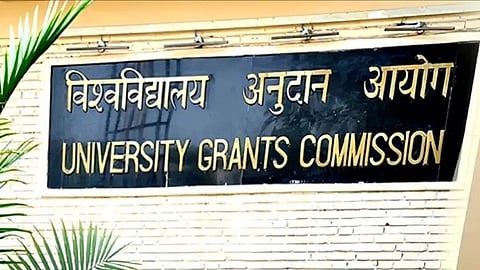
On January 28, 2026, a petition was mentioned before the Chief Justice of India for urgent listing. The petition challenges the constitutional validity of the University Grants Commission’s (UGCs) Promotion of Equity in Higher Education Institutions Regulations, 2026.
The counsel orally mentioned the matter before Chief Justice of India Justice Surya Kant and submitted that certain provisions of the new regulations promote discrimination against another category. “The urgency is that there are provisions in the regulations that have the effect of promoting discrimination against people belonging to the general classes,” the counsel submitted.
Responding to the submission, the CJI remarked, “We are also aware of what is happening.” The counsel informed the Court that defects in the petition would be cured on the same day and sought an early listing. The case has been filed as Rahul Diwan and Others v. Union of India (Diary No. 5477/2026). Directing the counsel, the CJI said, “Give your case number, make sure the defects are cured.”
The 2026 Regulations were framed by the UGC to address caste-based discrimination on university campuses. However, multiple petitions have been filed before the Supreme Court challenging Regulation 3(c), contending that the protection against caste discrimination provided under it is exclusionary. Regulation 3(c) defines “caste-based discrimination” as discrimination only on the basis of caste or tribe against members of the Scheduled Castes (SC), Scheduled Tribes (ST), and Other Backward Classes (OBC).
The petitioners argue that this definition restricts institutional protection and is wrongfully limited to select categories, while excluding similarly placed victims belonging to general or upper castes.
A separate petition filed on January 27, 2026, by advocate Vineet Jindal contends that Regulation 3(c), in its present form, denies equal protection of law to persons outside the SC/ST/OBC categories. The plea seeks a caste-neutral and constitutionally compliant definition of caste-based discrimination and asks that protection be extended to all individuals subjected to caste-based prejudice, irrespective of caste identity.
Jindal has argued that the provision creates a hierarchy of victimhood by legally recognising discrimination only when suffered by certain reserved categories, thereby violating Articles 14, 15(1), and 21 of the Constitution. He further contends that the regulation proceeds on the assumption that caste-based discrimination operates only in one direction, ignoring evolving social realities on university campuses.
The petition seeks an order restraining the Union government and the UGC from enforcing Regulation 3(c), or alternatively, directing a redefinition of caste-based discrimination in a caste-neutral manner.
The UGC Regulations were framed following directions from the Supreme Court, which had asked the Commission to submit updated anti-discrimination rules while hearing a petition filed by the mothers of Rohith Vemula and Payal Tadvi. Vemula, a PhD scholar at the University of Hyderabad, and Tadvi, a resident doctor in Mumbai, died by suicide in separate incidents, with allegations of caste-based harassment by seniors.
In March 2025, the Union government informed the Supreme Court that draft regulations had been prepared to address the issues raised. The Court later allowed the UGC to finalise and notify the Regulations while permitting stakeholders to submit suggestions. After granting eight weeks for consideration of representations, the Regulations were notified in January 2026.
Since their notification, the Regulations have triggered widespread opposition, including student protests, resignations within the BJP, criticism from MPs, and multiple legal challenges. Regulation 3(c) remains at the centre of the controversy, with critics alleging exclusion, lack of safeguards against false complaints, and discrimination against general category students.
Suggested Reading:
Subscribe to our channels on YouTube and WhatsApp
Download our app on Play Store
