
- HOME
- OPINION
- ON GROUND
- INTERVIEW
- Neta Profile
- Editor's Pick
- INDIA
- NewsGram USA
- WORLD
- न्यूजग्राम
- POLITICS
- ENTERTAINMENT
- CULTURE
- LIFESTYLE
- ECONOMY
- SPORTS
- Jobs / Internships
- Misc.
- NewsGram Exclusive
Key Points:
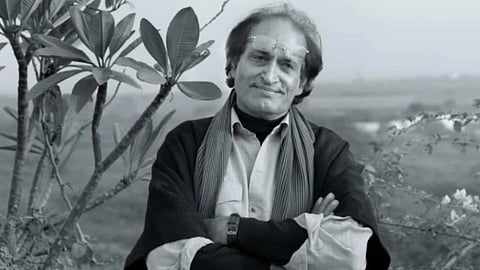
Raghu Rai, one of India’s greatest photojournalists, passed away on April 26, 2026, leaving behind a five-decade legacy of capturing India’s most defining moments.
He documented major events like the Bhopal Gas Tragedy, Emergency, and 1971 war, creating powerful images that showed raw human emotions and historical realities.
Mentored by Henri Cartier-Bresson, Rai blended art, politics, and spirituality, influencing generations and earning global recognition, including joining the prestigious Magnum Photos collective.
India bid a final goodbye to one of its greatest visual storytellers as Raghu Rai breathed his last on Sunday, April 26, 2026, concluding an illustrious career in photojournalism. Tributes have poured in worldwide, praising his unmatched skills and his role in inspiring generations of young photographers. From the calm stillness of the Dalai Lama and Mother Teresa to the intense tension of the 1980s militancy in Punjab, Rai photographed incredible moments that highlighted the most significant events in modern Indian history.
Widely regarded as the pioneer of Indian photojournalism, Rai enjoyed the title of “India’s most celebrated photojournalist.” Across a career spanning more than five decades, he documented India as it shifted from one political era to another. He believed in capturing the authentic expression of a person or the raw truth of a situation, elevating his work far beyond ordinary documentation.
Rai began his journalistic career in 1966 as the chief photographer for The Statesman newspaper, later moving on to serve as the Director of Photography for India Today and working with Sunday magazine. He was greatly influenced by the famous French photographer Henri Cartier-Bresson, who mentored him and ultimately nominated Rai to join the prestigious global cooperative Magnum Photos in 1977.
Raghu Rai’s most notable works include his documentation of the 1971 India-Pakistan War during the liberation of Bangladesh. Traveling to the border as a frontline witness for the press, he captured the harrowing plight of war refugees. He later photographed the turbulent period of the Indian Emergency (1975–1977). In 1984, he traveled to Bhopal, Madhya Pradesh, to document the horrors of the Bhopal Gas Tragedy, producing some of the most haunting and globally recognized images of the disaster—most notably his iconic photograph of the burial of an unknown child.
Rai extensively documented Prime Minister Indira Gandhi, capturing her as a formidable political figure in settings ranging from charged election campaigns to closed-door Congress party meetings. Beyond politics, his photographs of legendary Indian artists—such as singer Lata Mangeshkar, filmmaker Satyajit Ray, painter MF Husain, and superstar Amitabh Bachchan—brilliantly showcased the intersection of art, artist, craft, and audience. He managed to immortalize the raw emotions of both the performers and their spectators with incredible brilliance.
Between 1984 and 1994, as Punjab witnessed a violent insurgency marked by heightened militancy, Rai ventured into the heart of the conflict. He met and photographed the Sikh separatist leader Jarnail Singh Bhindranwale prior to Operation Blue Star. His images from this period masterfully captured the heavy tension of the era—a time when fear loomed over Punjab and the central government was mobilizing to neutralize the insurgency.
See Also: The Other Side of Francis Xavier: Missionary, Saint, and Architect of the Goa Inquisition
In interviews, Rai frequently described his relationship with the camera as a profound form of spiritual engagement. He famously stated: "I meet my god through my camera." He often spoke of the dynamic energy he felt while photographing, a force that enabled him to absorb and reflect the deepest emotions of his subjects and settings.
Expressing his condolences, PM Modi said in a post on X: “Shri Raghu Rai Ji will be remembered as a creative stalwart, who captured India’s vibrancy through his lens. His photography had extraordinary sensitivity, depth and diversity. It brought people closer to the different aspects of life in India. His passing is an irreparable loss to the world of photography and culture. My thoughts are with his family, admirers and the photography fraternity in this hour of grief. Om Shanti.”
Ultimately, Raghu Rai did not just take photographs; he preserved the soul of India on film. His legacy will continue to guide and inspire anyone who looks through a viewfinder, ensuring that the history he captured will never be forgotten.
(Edited by Dhruv Sharma)
Suggested Reading:
Subscribe to our channels on YouTube and WhatsApp
Download our app on Play Store

