
- HOME
- OPINION
- ON GROUND
- INTERVIEW
- Neta Profile
- Editor's Pick
- INDIA
- NewsGram USA
- WORLD
- न्यूजग्राम
- POLITICS
- ENTERTAINMENT
- CULTURE
- LIFESTYLE
- ECONOMY
- SPORTS
- Jobs / Internships
- Misc.
- NewsGram Exclusive

Key Points:
Dr Anand Ranganathan's recent comment on former education minister Maulana Azad sparked a debate after lyricist Javed Akhtar demanded the source of the quote cited by Ranganathan.
Ranganathan claimed that the portrayal of Azad in historical books focuses only on one side of the coin while overlooking the other side.
Ranganathan also shared a digital link to the said source in a X post, which is an Urdu document titled Khutbat-e-Azad (Speeches of Azad).
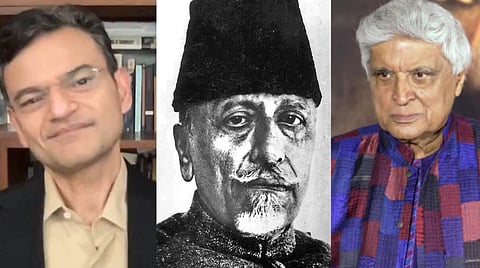
POLITICAL COMMENTATOR DR ANAND RANGANATHAN’S recent views on India’s first Education Minister, Maulana Azad, have turned into a complex yet tricky discourse on the internet. Recently, a video of Ranganathan challenging the celebration of Maulana Azad quickly escalated when veteran lyricist Javed Akhtar responded to the video.
On September 9, 2026 a video was posted in collaboration between the YouTube channels of Ranganathan and Clear Cut Talks. In the video Ranganathan referenced Prime Minister Narendra Modi’s X post dated November 11, 2022 celebrating Maulana Azad on his birth anniversary. He quoted PM Modi’s post, in which the former Education Minister was praised for his “intellectual prowess” and “passion for education,” but later referenced a quote by Maulana Azad, pointing out an overlooked dimension of him.
In the video, Anand Ranganathan quoted Maulana Azad as saying, “Be extremely hard against Kafirs (unbelievers) but extremely kind among ourselves.” He continued, “All relationships in the world can break down; a father can turn against his son, a brother against his brother, and a mother can shun her child, but the relationship of a Muslim with a Muslim can never be severed.” Ranganathan claimed that the portrayal of Azad in historical books focuses only on one side of the coin while overlooking the other side.
He demanded change starting from the top and further added, “If the topmost person believes this to be the true facet of our history and what is to be taught in our schools, eulogize these people, then I don't think there is any redemption for this country.” He did not cite the source of the quote earlier. The video was widely shared on social media, with many users raising concerns regarding the rhetoric of presenting a particular narrative as secularism.
While Ranganathan’s statement was greenlit by many netizens, on September 14, 2026 Indian lyricist Javed Akhtar asked for the source of the quote attributed to Maulana Azad. “Recently, in one of your reels, you have read a paragraph and attributed it to Maulana Azad. I honestly found it quite unlike his lifelong sociopolitical stances,” Akhtar wrote in his X post. He further asked for the source of the quote, writing, “Is it a part of any of his articles or speech? Please let me know the when and where of it. I’ll be really thankful. Warmly, Javed.”
On September 15, 2026, Anand Ranganathan took to X to respond to Javed Akhtar, citing the source of the quote. He wrote, “Dear Mr Javed Akhtar. Alhamdulillah. The quote is from Maulana Azad's Calcutta Speech. The speech was published in Khutbat-e-Azad.” Ranganathan also shared a digital link to the said source, which is an Urdu document titled Khutbat-e-Azad (Speeches of Azad).
Ranganathan further explained some excerpts from Khutbat-e-Azad, in which he referenced parts of Azad’s speech. He wrote that Azad’s message called on “Indian Muslims to unite with Muslims around the world and save the Caliphate.” He also wrote that Azad quoted Quranic verse 48:29: “The Messenger of Allah and those with him are severe against the Kafirs, merciful among themselves.”
At the end of the post, Ranganathan jotted down a personal message for Javed Akhtar, writing, “This is the second time I am enlightening you on your heroes and their lifelong sociopolitical stances.” He further wrote that, the first time, Akhtar refused to believe that books were banned under the government of former Prime Minister Jawaharlal Nehru. He also referenced the case of Indian film lyricist and poet Majrooh Sultanpuri, who was jailed for reciting a poem against Nehru—a claim Akhtar allegedly refuted.
“Please don't ask me about Gandhi next—the Mahatma, not Rahul, though both are probably your heroes. Cheers, WDTP,” wrote Ranganathan, concluding the post.
Abul Kalam Ghulam Muhiyuddin, also known as Maulana Azad, was born in Mecca, which is now part of Saudi Arabia. He was referred to as Abul Kalam Azad. He was elected president of the Indian National Congress twice and was the longest-serving Education Minister of India, serving for nearly 11 years. From being an active critic of the British Raj to playing a major role in India’s freedom movement, Maulana Azad was often remembered for his calls for religious unity and a unified nation.
(Edited by Harsh Pandey)
Suggested Reading:
Subscribe to our channels on YouTube and WhatsApp
Download our app on Play Store

