
- HOME
- OPINION
- ON GROUND
- INTERVIEW
- Neta Profile
- Editor's Pick
- INDIA
- NewsGram USA
- WORLD
- न्यूजग्राम
- POLITICS
- ENTERTAINMENT
- CULTURE
- LIFESTYLE
- ECONOMY
- SPORTS
- Jobs / Internships
- Misc.
- NewsGram Exclusive

Key Points:
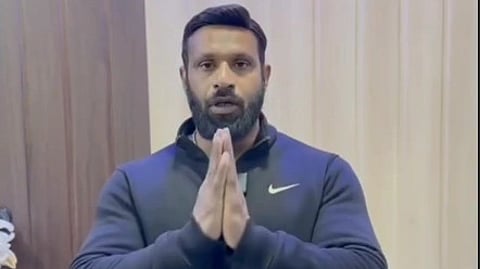
The Uttarakhand High Court on Thursday, March 19, 2026, criticised gym owner Deepak Kumar, popularly known as Mohammad Deepak for filing a petition seeking to quash the FIR registered against him, and requesting police protection for him and his family.
Justice Rakesh Thapliyal orally observed that his petition sought to seek an abuse of power and attempted to influence the investigation. The Court labelled the pleas as pressure tactics, and ordered the Police to submit the status report of all FIRs concerned with the case.
The case dates back to January 26, 2026, in Kotdwar, Uttarakhand, when Deepak Kumar confronted a right-wing crowd who harassed an old shopkeeper. Following the incident, multiple FIRs were filed by the Uttarakhand Police, including one against Deepak and one against members of the the Bajrang Dal and VHP led crowd.
The Uttarakhand High Court on Thursday, March 19, 2026, slammed gym owner Deepak Kumar, widely known as ‘Mohammad Deepak’, for filing a petition seeking police protection and a departmental inquiry against police officials probing the Kotdwar incident, allegedly involved in a partisan conduct. A single-judge bench led by Justice Rakesh Thapliyal heard the case filed by Deepak and his friend Vijay Rawat, represented by Advocate Navnish Negi.
The Court orally observed that the extraneous prayers in the petition reflected an abuse of the legal process and an attempt to influence the ongoing investigation.
The bench strongly criticised Deepak, questioning the rationale behind a "suspected accused" seeking police protection from the very agency investigating him. Justice Thapliyal noted that the law enforcement authorities are competent and have a greater interest in ensuring his safety. "They are more concerned about your safety than you are, because they have to investigate the FIR and file a chargesheet," the Court remarked.
Justice Thapliyal further observed that instead of filing a writ petition in the High Court for these demands, Deepak should have approached a magistrate under Section 175(3) of the Bharatiya Nagarik Suraksha Sanhita (BNSS), which empowers magistrates to monitor police investigations into cognizable offences. Finding no substance in his arguments for protection, the Court pointed out the timeline of events. The bench noted that after the initial incident on January 26, 2026, not a single hand had been laid on Deepak, implying his immediate fears were unfounded.
Furthermore, the Court restrained Deepak from making statements or posting videos on social media regarding the incident, noting that it could affect the ongoing probe. The bench orally reprimanded him, stating that he should not sensationalise the matter and let the police do their job.
The case stems from an incident on January 26, 2026, when Deepak Kumar and Vijay Rawat confronted a crowd harassing a 70-year-old Muslim shopkeeper, Vakil Ahmed, in Kotdwar, Uttarakhand.
The group, containing members of the Bajrang Dal and Vishva Hindu Parishad (VHP), demanded the shopkeeper drop the word “Baba” from his 30-year-old shop, 'Baba School Dress and Matching Center', citing its proximity to the revered Baba Siddhbali temple. Deepak intervened to defuse the situation, famously identifying himself as 'Mohammad Deepak' to the mob to assert that all citizens are equal.
Following the confrontation, the police registered multiple FIRs, including one against the Hindutva group members based on the shopkeeper's complaint, and another against Deepak and Vijay on charges of rioting, causing hurt, and criminal intimidation, based on a complaint by right-wing activists.
While Deepak became a national symbol of resilience, praised by prominent leaders like Rahul Gandhi and John Brittas, he faced significant backlash locally. A mob gathered outside his gym and home, causing his business to suffer, and he reported facing constant harassment and financial troubles. This prompted Deepak to file the petition in the High Court to quash the FIR, seek protection, and demand the registration of a hate speech case under Section 196 of the Bharatiya Nyaya Sanhita (BNS) against the perpetrators.
Ultimately, the High Court refused to entertain the extraneous demands of the petition, viewing them as a tactic to pressure the investigating agency. In its latest orders, the Court directed the state authorities to submit a status report on all FIRs connected to the clash. The matter remains listed for further hearing as the Court awaits Deepak's financial disclosure affidavit and the police's progress report.
(Edited by Dhruv Sharma)
Suggested Reading:
Subscribe to our channels on YouTube and WhatsApp
Download our app on Play Store
