
- HOME
- OPINION
- ON GROUND
- INTERVIEW
- Neta Profile
- Editor's Pick
- INDIA
- NewsGram USA
- WORLD
- न्यूजग्राम
- POLITICS
- ENTERTAINMENT
- CULTURE
- LIFESTYLE
- ECONOMY
- SPORTS
- Jobs / Internships
- Misc.
- NewsGram Exclusive

IN THE WAKE OF PARTITION in January 1948, as Delhi shivered in extreme cold, Mahatma Gandhi was preparing for what Robert Payne, author of The Life and Death of Mahatma Gandhi, would call “the last and greatest of his campaigns.” After his final fast for communal peace and the release of Pakistan’s share of funds—amounting Rs 55 crore—the Father of the Nation was clear in his intention to travel to the newly carved out country of Pakistan. In his prayer meetings he had made his intentions clear, as he reportedly said, “Both India and Pakistan are my country. I am not going to take out a passport to go to Pakistan.”
However, his last campaign remained unfinished following what transpired at the end of the month. On January 30, 1948, Mahatma Gandhi was assassinated by Nathuram Godse in Birla House, Delhi. Since then, experts and historians have opined on what could have happened if a national sensation and an influential figure such as Gandhi would’ve set foot in the neighbouring country.
Mahatma Gandhi was an extreme pacifist, who tried to pacify all conflict through negotiation and non-violent means. This is why, when he was opposing the Partition of India, Gandhi even proposed that Jinnah should be appointed as the Prime Minister of a united India. Historical accounts from people close to him say that even after August 15, 1947, he did not accept the India-Pakistan border as final in his heart. Accounts in Robert Payne’s biography and Collins and Lapierre’s Freedom at Midnight give details of his future plans in the new neighboring nation: a march–a padyatra of peace—to escort Muslim refugees home and appeal directly to the people.
The Father of the Nation had planned to take Sikh and Hindu refugees with him to Pakistan, and in exchange brought back some Muslim refugees to India to show both the countries that the brotherhood in the subcontinent is still strong. He had already sent his message through intermediaries and spoke of going without military support, trusting in the goodness of ordinary Muslims in Pakistan as they were equally revering of him as Hindus.
Ramachandra Guha, an expert on Gandhian history, notes that the 78-year-old leader saw this as more than a visit; it was a continuation of his peace work in Noakhali and Delhi and might have been the last great attempt to heal the subcontinent’s bleeding wounds before they became lifelong scars.
Robert Payne in The Life and Death of Mahatma Gandhi writes that Gandhi had discussed the idea with his close associates, believing he could “lead the Muslims back into India and the Hindus back to Pakistan” through the force of ahimsa (non-violence). Asghar Wajahat, writer of the play Pakistan Mein Gandhi (Gandhi in Pakistan) — a fictional story of what could've happened if Gandhi had gone to Pakistan, also opines that Gandhi's resolve to not issue a passport to cross border could've played a part to destabilize Pakistan's claim to an autonomous state.
Collins and Lapierre in Freedom at Midnight also document Gandhi making arrangements for his visit to Pakistan, while noting Jinnah’s reported reluctance and scepticism for the same.
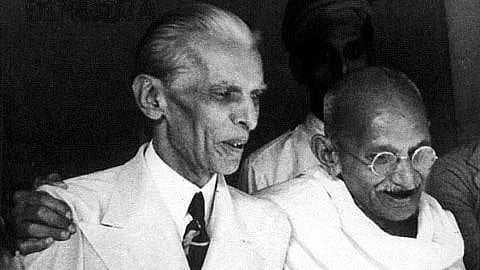
Historians have often speculated on how Gandhi's visit to Pakistan could've impacted the country's governance. Muhammad Ali Jinnah, who was already ill and focused on maintaining stability in the new nation amid massive refugee crises and the Kashmir conflict, had various ideological differences with Gandhi. Some accounts, from Collins and Lapierre, suggest Jinnah was wary of Gandhi’s visit and reportedly set informal conditions, such as Gandhi not publicly challenging the Two-Nation Theory.
Guha observes that a meeting between the two leaders — both Gujaratis with long shared history in the independence movement — could have created a rare moment of peaceful intellectual dialogue. However, whether this meeting could've softened Jinnah’s stance or shaken Pakistan’s early foundations remains a matter of conjecture. Jinnah’s own speech on August 11, 1947, to Pakistan’s Constituent Assembly, which emphasised equal rights for all citizens regardless of religion — a position that aligned with Gandhi's appeals, offer historians some semblance of a shift but nothing concrete can be determined.
See Also: Mahatma Gandhi and Sarala Devi: The Controversial ‘Spiritual Marriage’
Gandhi was assassinated on January 30, 1948 before he could make the journey. His death ended what Payne called his final great campaign and what Guha describes as one of the last attempts by a major leader to bridge the divide created by Partition.
While historians differ on how much impact such a visit could have had, especially given the deep trauma of 1947 still lingering in the minds of public, most agree it represented Gandhi’s unwavering commitment to non-violence and Hindu-Muslim unity even in the darkest hour.
The Hindu nationalists, like Nathuram Godse, were of the opinion that Gandhi was a pro-Muslim leader and would've destroyed India with his stringent demands like that of paying Pakistan their promised share from India's funds. Gandhi going on an indefinite fast to force Indian government to clear Rs 55 crore for Pakistan, when they were actively trying to occupy Kashmir in the North, was the major point of contention for some members of the public. Godse in his statement to the court said, "The accumulating provocation of 32 years culminating in his last pro-Muslim fast at last goaded me to the conclusion that the existence of Gandhiji should be brought to an end immediately."
However, the history tells that the situation was much more complex than what right-wing nationalist organisations perceived. Although, one of Gandhi's demands were to give Pakistan their share of assets, the major reason behind it, as reported by his peers close to him, was communal amity. As noted, he was an extreme pacifist and one might say an optimist as well. He believed lending a hand to their new neighbour will establish goodwill between the two countries and may open up, what he believed, path to potential union in the future.
Although, success was never guaranteed and likely it was just a hopeless endeavor, especially after the horrors of partition, seeing Gandhi as just pro-Muslim figure would be misjudgement of a complex personality.
Suggested Reading:
Subscribe to our channels on YouTube and WhatsApp
Download our app on Play Store


