
- HOME
- OPINION
- ON GROUND
- INTERVIEW
- Neta Profile
- Editor's Pick
- INDIA
- NewsGram USA
- WORLD
- न्यूजग्राम
- POLITICS
- ENTERTAINMENT
- CULTURE
- LIFESTYLE
- ECONOMY
- SPORTS
- Jobs / Internships
- Misc.
- NewsGram Exclusive

According to the World Inequality Report 2026, India continues to rank among the most unequal countries in the world, with stark disparities in income, wealth and gender participation remaining largely unchanged over the last decade.
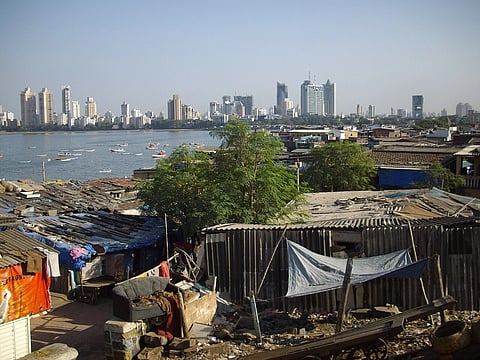
Released on 10 December 2025, the report estimates that the top 10% of income earners in India account for around 58% of national income, while the bottom half receives just 15%. This gap between the richest and poorest segments of society has remained broadly stable between 2014 and 2024 at roughly 38%, indicating that economic growth has not translated into a more equitable distribution of income.
Wealth inequality in India is even more pronounced. The richest 10% hold approximately 65% of the country’s total wealth, while the top 1% alone control about 40%. By contrast, the bottom 50% of the population owns just over 6% of total wealth. These figures place India among the worst performers globally in terms of wealth concentration.
According to the report’s estimates, the average annual income in India stands at around €6,200 per person on a Purchasing Power Parity (PPP) basis. Average wealth per capita is estimated at about €28,000. While these averages provide a snapshot of overall economic levels, the report cautions that they mask deep internal disparities, with large sections of the population earning and owning far less than these figures suggest: Income PPP for the bottom 50% stands at only €940, while the top 1% earns €140,649 on average; Similarly, wealth PPP for the bottom 50% stands at only €1,801, while the top 1% owns €1,128,435 on average.
The data also highlights a persistent gender gap in the Indian economy. Female labour force participation remains extremely low at 15.7% and has shown no improvement over the past decade. This stagnation underscores structural barriers that limit women’s access to paid work and income, further reinforcing inequality across households and generations.
Globally, the report paints a picture of extreme and growing concentration of wealth. It notes that the top 0.001% of the world’s population, fewer than 60,000 individuals, now own three times more wealth than the poorest half of humanity combined. Within most regions, including South Asia, the wealth held by the top 1% exceeds that of the bottom 90% put together.
The authors argue that such disparities are not inevitable but are shaped by policy choices, institutional frameworks and governance structures. The report stresses that inequality is “a political choice” and that countries with stronger redistribution mechanisms, fairer taxation systems and higher social investment tend to see narrower gaps.
In the Indian context, the report points to weak redistributive capacity and limited progressivity in taxation as contributing factors. While income tax rates rise for most earners, the effective tax burden on the very wealthy is often lower than that faced by middle-income households. This regressive pattern, the report notes, reduces public resources available for investment in education, healthcare and social protection.
The findings also draw attention to the broader consequences of entrenched inequality. High levels of economic disparity are linked to fragile democratic institutions, reduced social mobility and heightened vulnerability to crises, including climate-related shocks. Globally, the poorest populations contribute the least to emissions associated with private wealth but bear a disproportionate share of climate risks.
The report argues that meaningful change is possible through coordinated action. It highlights progressive taxation, including proposals for a global wealth tax, as one potential tool. Even a modest tax on the world’s wealthiest individuals, it notes, could generate revenues comparable to the total education budgets of low- and middle-income countries.
For India, the data underscores the challenge of translating economic growth into shared prosperity. Despite rising aggregate wealth and income, inequality across income, wealth and gender dimensions remains deeply entrenched. The report concludes that without deliberate policy interventions aimed at redistribution and inclusion, these structural divides are likely to persist.
Suggested Reading:
Subscribe to our channels on YouTube and WhatsApp
Download our app on Play Store

