
- HOME
- OPINION
- ON GROUND
- INTERVIEW
- Neta Profile
- Editor's Pick
- INDIA
- NewsGram USA
- WORLD
- न्यूजग्राम
- POLITICS
- ENTERTAINMENT
- CULTURE
- LIFESTYLE
- ECONOMY
- SPORTS
- Jobs / Internships
- Misc.
- NewsGram Exclusive

Key Points
Tamil Nadu recorded 85.10% turnout, but the increase in actual voters is modest compared to past elections.
Chennai’s turnout rose to 86.2% after revisions, yet fewer people voted than in previous cycles.
A reduced electorate following revision of voter rolls has inflated turnout percentages across the state.
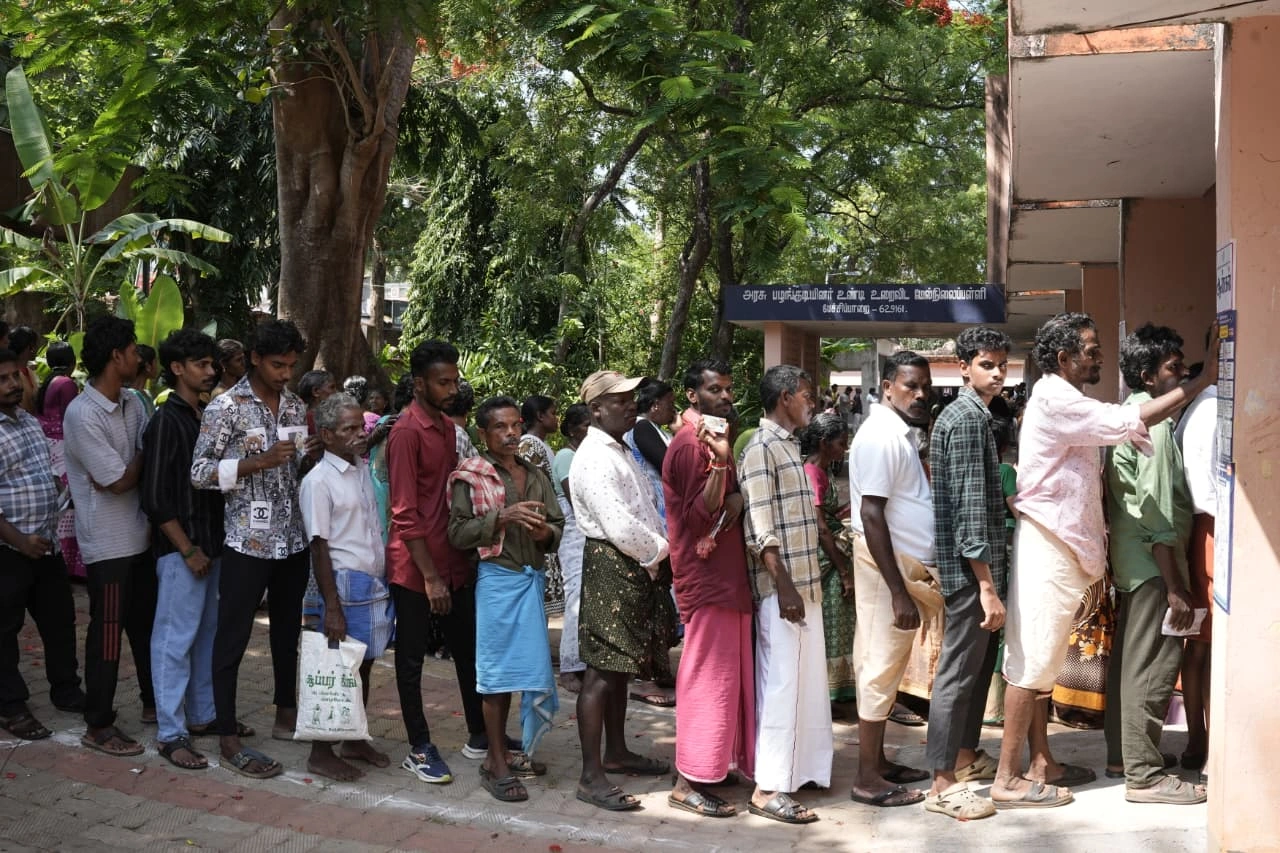
Tamil Nadu’s 2026 Assembly election has produced a headline figure of over 85% voter turnout, the highest in the state’s electoral history. However, closer examination of the data reveals a more complex picture, where high percentages mask slower growth in actual voter participation, particularly in urban centres like Chennai.
According to provisional data revised by the Election Commission of India (ECI), 4,87,99,141 voters cast their ballots on 23 April 2026, representing 85.10% of the state’s 5,73,43,291 registered electors. The revised figure marked a marginal drop of 0.05% from earlier estimates. Officials said the data remains provisional and subject to further updates, but confirmed that no re-polling has been recommended across any of the 75,064 polling stations.
The headline turnout suggests a surge in participation. Yet, when placed in context, the increase in actual voters is relatively modest. Compared to around 4.63 crore voters in 2021, the 2026 election saw approximately 4.87 million people vote – a rise that aligns broadly with natural population growth rather than a dramatic expansion in political engagement.
A key factor behind the high turnout percentage is the reduction in the total electorate. Ahead of the election, a Special Intensive Revision (SIR) of voter rolls reduced the number of registered electors from about 6.29 crore in 2021 to 5.73 crore in 2026. This contraction means that even a modest increase in voters translates into a significantly higher turnout percentage.
This effect is particularly visible in Chennai. Initial data showed a turnout of 83.7% across the city’s 16 constituencies. Following re-verification and the addition of postal ballots, the figure was revised upward to 86.2%, with total votes rising to 24.41 lakh. Postal ballots alone accounted for 20,189 votes, including those cast by elderly voters, essential service workers, and election personnel.
However, Chennai recorded 23,69,493 voters in 2026, which is 47,322 fewer than the 24,16,815 who voted in 2021. This continues a longer-term trend, with absolute voter participation declining over successive election cycles despite rising turnout percentages.
The paradox is explained by the shrinking voter base. Chennai’s electorate was reduced sharply from around 40 lakh in 2021 to about 28.3 lakh in 2026. This smaller denominator inflates the turnout percentage even when the number of people voting does not increase proportionately.
Across constituencies, the pattern is uneven. Some areas registered gains in voter participation, while others saw declines. In Chennai, Kolathur recorded a significant increase in votes, followed by Thiru Vi Ka Nagar and Velachery. In contrast, constituencies such as RK Nagar and Villivakkam saw notable drops in voter numbers.
Statewide, Karur district recorded the highest polling percentage at 92.65%, well above the state average, while Veerapandi constituency in Salem district followed closely. Several districts, including Dharmapuri, The Nilgiris and Tirunelveli, reported slight declines in turnout.
Despite these variations, the broader trend remains consistent. The growth in votes polled has slowed over time, with the 2026 election recording the lowest increase in voter numbers in more than a decade.
Officials attributed part of Chennai’s improved turnout percentage to awareness campaigns under the Systematic Voters’ Education and Electoral Participation (SVEEP) programme. “With more effort, we could have touched 90%, though factors like migration and urban apathy make exceeding that mark difficult in cities,” a poll official said.
High turnout is generally viewed as a sign of strong political mobilisation or anti-incumbency. However, when the size of the electorate changes substantially, such conclusions become less reliable.
Suggested Reading:
Subscribe to our channels on YouTube and WhatsApp
Download our app on Play Store
