
- HOME
- OPINION
- ON GROUND
- INTERVIEW
- Neta Profile
- Editor's Pick
- INDIA
- NewsGram USA
- WORLD
- न्यूजग्राम
- POLITICS
- ENTERTAINMENT
- CULTURE
- LIFESTYLE
- ECONOMY
- SPORTS
- Jobs / Internships
- Misc.
- NewsGram Exclusive

Suvendu Adhikari, BJP candidate from Bhabanipur and Nandigram, told the media that he had spoken to polling agents in his constituency and added that polling should take place without any violence. He said, ‘We are Hindus, we are Sanatanis. I offered prayers, offered a naman.’ Adhikari also addressed the issue of SIR in Mamata-ruled West Bengal and said, ‘If there are no dead or fake voters or infiltrators, there is no chance for Mamata to win’.
Mamata Banerjee will contest from Bhabanipur against BJP’s Suvendu Adhikari in the West Bengal Assembly Elections 2026.
Edappadi K. Palaniswami cast his vote at the Panchayat Union Primary School in Siluvampalayam. Palaniswami will contest from the AIADMK stronghold of Edappadi constituency against DMK’s Kasi.
BJP leader and Union Minister J.P. Nadda appealed to voters in West Bengal and Tamil Nadu on X to vote in large numbers and exercise their democratic rights. He further wrote about the grievances of the people of West Bengal, raising concerns over rising corruption, weak governance, and the "consequences of uncontrolled infiltration, which have jeopardized the state’s security and stability’ for a long time.
"Now is the time to stand up for change. Come out fearlessly, cast your vote, and encourage your family and friends to participate as well," wrote J.P. Nadda.
In a separate X post, he wrote that he firmly believed the people of Tamil Nadu would elect a government that ensures the "combined functioning of development and cultural identity." He appealed to the people of Tamil Nadu to encourage others to come out and vote in large numbers”.
TVK chief Vijay has arrived in Chennai to cast his vote. Vijay will be contesting from two constituencies—Perambur and Trichy East. A huge crowd gathered outside the polling booth to catch a glimpse of the actor-turned-politician.
The newly founded Tamizhaga Vettri Kazhagam (TVK) has been regarded as a tough competitor against veteran political parties like the DMK and AIADMK following the popular actor’s entry into politics. Vijay will contest against DMK’s incumbent leader Dr. Inigo Irudayaraj in Trichy East, while in Perambur, he will face AIADMK’s Elambai R. Tamilselvan and DMK’s R.D. Sekar.
Actor Rajinikanth arrived in Chennai to cast his vote. He exercised his franchise at a polling booth at Stella Maris School in Chennai and showed his inked finger to the media after voting.
DMK president and Tamil Nadu Chief Minister M.K. Stalin has arrived to cast his vote along with his family at a polling station in Chennai. He was accompanied by his son, Udhayanidhi Stalin, the Deputy Chief Minister of Tamil Nadu. M.K. Stalin will contest from the Kolathur constituency against Santhana Krishnan of the opposition party AIADMK.
Meanwhile, his son Udhayanidhi Stalin will contest from the Chepauk–Thiruvallikeni seat against AIADMK’s Adhirajaram and TVK’s D. Selvam.
According to the latest report by ANI, following a crude bomb incident in Murshidabad before polling began, a scuffle broke out between TMC workers and Aam Janata Unnayan Party (AJUP) founder Humayun Kabir. As per locals, a series of crude bombs were hurled on a road in Shibinagar before voting began, injuring a woman who was taken to the hospital with minor injuries.
Tension escalated after another crude bomb was allegedly hurled during voting in Nowda, Murshidabad, leaving several people injured. According to initial reports, the bomb was thrown at people during polling, causing panic and distress. ASP Majid Khan told ANI that the situation is peaceful and added, "nothing has happened anywhere".
Kabir addressed the situation and said that in all 22 seats of Murshidabad peaceful elections are taking place. He continued, "But in 2 booths of Nowda here, in number 9 and number 10, some incident happened overnight. They snatched the bags of local Police."
BJP candidate Shankar Ghosh arrived to cast his vote at a polling station at Jagadish Chandra Vidyapith in Siliguri. Ghosh will contest from the Siliguri constituency against All India Trinamool Congress candidate Gautam Deb
PM Modi praised the ECI at an alection rally in Nadia, West Bengal, as half the state goes to polls. He lauded the Commission for its work in curbing poll-related violence in the state, saying "This is the first election of its kind in the last 50 years in which violence has been kept to an absolute minimum."
"Previously, it was common practice to hang someone every week and simply claim it was a suicide," he continued. He congratulated the ECI for having "once again restored the dignity of democracy on the soil of Bengal."
Residents and security officers clashed in West Bengal's Birbhum district after EVM glitches led to delays and rising tensions. The malfunction occured at a booth in the Kharisaol area of Dubrajpur Assembly constituency.
Electors alleged that votes cast for the TMC were being registered for the BJP. Voting was then halted, leading to protests outside the booth. Tensions escalated, with locals pelting stones at security personnel who responded with laathi charges to disperse the crowd. At least one police vehicle was damaged.
Voting then resumed under heavy deployment.
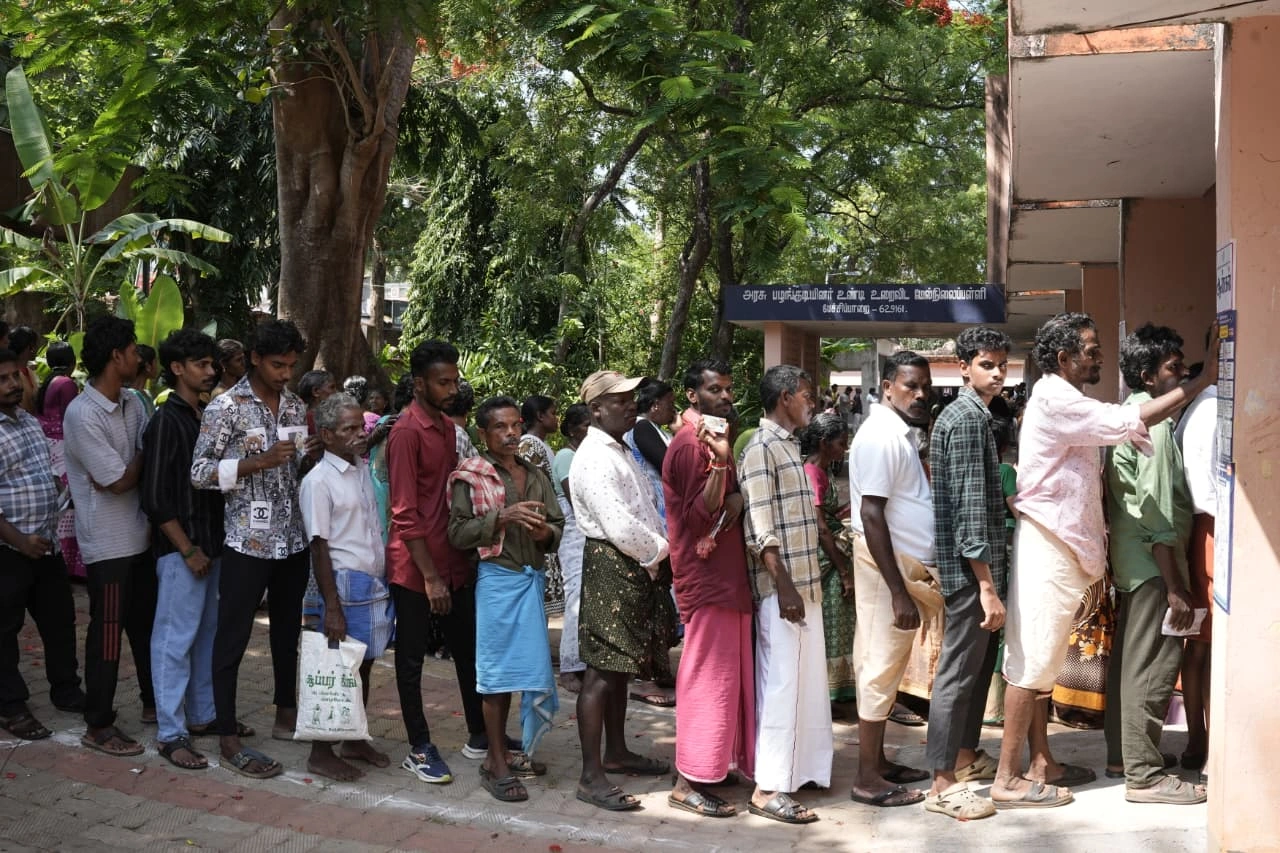
Voting has concluded across all constituencies in West Bengal and Tamil Nadu. Those in line to cast their ballots will be allowed to exercise their franchise. Bengal has continued its trend of high voter participation, while Tamil Nadu recored its highest ever turnout.
Final figures will be declared once all pending voters have cast their ballots.
After conclusion of Phase 1 polling, the final voter turnout stood at 91.78% in West Bengal and 84.69% in Tamil Nadu. “Highest ever percentage of polling in West Bengal and Tamil Nadu since Independence,” CEC Gyanesh Kumar said. “ECI salutes each voter of West Bengal and Tamil Nadu.” Earlier, the highest turnout recorded in West Bengal and Tamil Nadu was 84.72% and 78.29%, respectively.
According to a Press Release by the ECI, both states recorded slightly higher participation from women. The entire excercise involved 5.75 lakh staff
Subscribe to our channels on YouTube and WhatsApp
Download our app on Play Store


