
- HOME
- OPINION
- ON GROUND
- INTERVIEW
- Neta Profile
- Editor's Pick
- INDIA
- NewsGram USA
- WORLD
- न्यूजग्राम
- POLITICS
- ENTERTAINMENT
- CULTURE
- LIFESTYLE
- ECONOMY
- SPORTS
- Jobs / Internships
- Misc.
- NewsGram Exclusive

A tense political atmosphere led to violent clashes between AIADMK and DMK members during a budget session, where J. Jayalalithaa was allegedly assaulted and humiliated.
The incident became a defining moment, with Jayalalithaa vowing to return only as Chief Minister, strengthening her political image.
The episode remains a “black day” in Tamil Nadu politics, influencing her 1991 victory and still debated by leaders like M.K. Stalin.
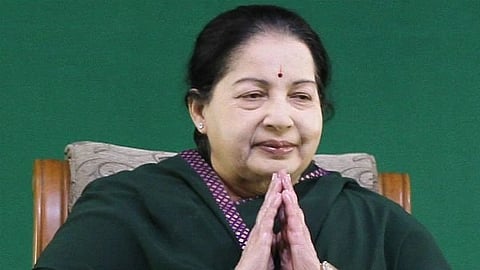
A dark chapter in the Tamil Nadu Assembly that dominated newspaper headlines and front pages on March 26, 1989. The incident made people question what the leaders they had elected were actually doing in the Assembly. It was the Jayalalithaa assault case, in which J. Jayalalithaa, the AIADMK leader and Leader of the Opposition, was allegedly attacked, with her saree and hair being pulled. It was a traumatic event in her life that fueled her anger and later contributed to her rise as one of the most powerful leaders of Tamil Nadu.
As the Tamil Nadu Elections 2026 are just weeks away, with polling scheduled for April 23, 2026, and results to be announced on May 4, 2026, let’s look back at this dark chapter in the political history of Tamil Nadu. The incident involved chaos inside the Assembly, where members of the ruling DMK and AIADMK clashed, leading to shouting as well as physical and verbal abuse. J. Jayalalithaa was reportedly assaulted and was seen walking out of the Assembly with a torn saree, untidy hair, and tears in her eyes.
The incident took place on March 25, 1989, when 41-year-old legislator J. Jayalalithaa, who was also the first female Leader of the Opposition in Tamil Nadu, saw her life change completely. The day of the Assembly session was already tense due to several ongoing issues.
The first was a controversy over a resignation letter allegedly written by Jayalalithaa. The letter even reached the Speaker, M. Tamizhkudimagan, who accepted it and it was circulated to newspapers, announcing that she was quitting politics. However, her party denied the letter, and Jayalalithaa herself also rejected it as fake.
The second issue was a police raid at the house of M. Natarajan, a close aide of Jayalalithaa. Amid all this, the Assembly session was important as the then Chief Minister, M. Karunanidhi, was set to present the budget after being out of power for 13 years. The political atmosphere was extremely tense.
AIADMK MLAs tried to stop the budget speech. J. Jayalalithaa also objected and reportedly called the then Chief Minister M. Karunanidhi a criminal. This led to a major clash between members of both the DMK and AIADMK, resulting in chaos, with files, microphones, and other objects being thrown.
During this chaos, Jayalalithaa was allegedly targeted, and her saree was pulled. She walked out of the Assembly in tears. Karunanidhi was also reportedly attacked, and his trademark glasses were broken.
Following the incident, J. Jayalalithaa said she felt humiliated and compared herself to Draupadi from the Mahabharata. She vowed that she would never return to the Assembly as a member of the Opposition and would only come back as the Chief Minister of Tamil Nadu. This incident became a turning point in her life, strengthening her political image and contributing to her victory in the 1991 elections, where she defeated M. Karunanidhi of the DMK.
The event is often referred to as a “black day” in Tamil Nadu Assembly history. While AIADMK leaders called it barbaric and brutal, some DMK leaders claimed it was staged for political gain. In a later interview with an English daily in 2023, M.K. Stalin called the incident a “drama” enacted by Jayalalithaa.
J. Jayalalithaa, popularly known as “Amma,” was one of India’s most remarkable leaders. She was originally a top-tier Tamil film actress, appearing in over 140 films. She was also a trained classical dancer and a talented performer.
In 1982, she entered politics by joining the All India Anna Dravida Munnetra Kazhagam (AIADMK). With her confidence and strong leadership, she quickly rose through the party ranks. She became the Leader of the Opposition and later rose to become the Chief Minister of Tamil Nadu.
Fulfilling her vow, she returned as Chief Minister and went on to serve six terms between 1991 and 2016, earning immense love and support from the people. She became one of the most powerful and respected figures in Tamil Nadu politics and led the party as its General Secretary until her death on December 5, 2016.
Suggested Reading:
Subscribe to our channels on YouTube and WhatsApp
Download our app on Play Store

