
- HOME
- OPINION
- ON GROUND
- INTERVIEW
- Neta Profile
- Editor's Pick
- INDIA
- NewsGram USA
- WORLD
- न्यूजग्राम
- POLITICS
- ENTERTAINMENT
- CULTURE
- LIFESTYLE
- ECONOMY
- SPORTS
- Jobs / Internships
- Misc.
- NewsGram Exclusive

Sable Island is known for its iconic wild horses that roam freely across its remote sand dunes.
The island’s harsh weather and shifting sands make it one of the most treacherous shipwreck zones in the Atlantic.
Strict conservation measures protect its fragile ecosystem, allowing rare species to thrive in isolation.
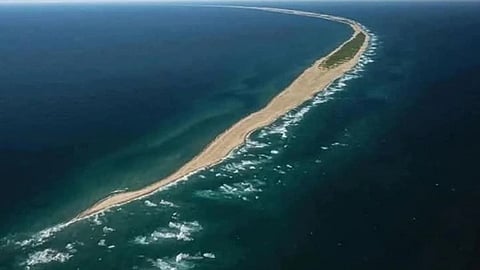
A long crescent of sand and grass drifting across the Atlantic is Sable Island, a place that feels like a whisper the ocean forgot to erase. The tides here keep erasing and redrawing human footprints with time. The island seems like a fragile, shifting natural system of dunes, marram grass and seals, layered with centuries of wrecks, rescues, stubborn settlements, lighthouses and scientific stewardship. The island has been a place that traps sailors, teaching the inhabitants there to live with loneliness.
Sable Island is located at the edge of the continental shelf of the North Atlantic, off the Nova Scotia coast, Canada. It lies 160–175 kilometres away from the mainland, situated roughly 290 kilometres southeast of Halifax. The island is quite narrow, only a few kilometres at its widest, and stretches roughly 42 kilometres in length, with its elevation barely reaching a maximum of a few dozen metres above sea level.
Sailors have termed it the “Graveyard of the Atlantic,” considering its remoteness and low profile teamed with frequent fogs, strong currents and violent storms. The island has been reshaped by waves, wind and storms, as sand erodes from the western shore and gets deposited on the east, slowly creeping the whole island across the sea and making survival uncertain on the island.
The history of wrecks near Sable takes us back to the wreck of the English ship “Delight” in 1583, followed by continuous shipwrecks across centuries, with the number of wrecks recorded in the area reaching 350. These gave rise to rescue efforts and seasonal salvagers, leading to the establishment of formal life-saving institutions. This was then followed by human habitation on the island in the form of life-saving station crews and their families, lighthouse keepers and government staff, although there were hints of seasonal landings and attempted settlements in the 16th and 17th centuries.
The first organised human presence was marked in the year 1801 when the Nova Scotia government established the island’s first formal life-saving station, called the Sable Island Humane Establishment. This helped provide shelter and assistance to mariners and reduced the loss of life from shipwrecks. The first two lighthouses were constructed in 1872 to help ships avoid doom in the area. Improved navigation and fewer wrecks were already achieved by the mid-20th century. The life-saving stations also became fewer, with the last keeper leaving after the automation of the final light tower in the 1980s.
The island remains a land that is occasionally visited and staffed but lacks a year-round civilian community. It is managed as a protected area by crews from the meteorological department, researchers and Parks Canada staff, with no permanent private population. The island became a National Park Reserve in 2013, with the agency overseeing access, science and conservation to date. The number of people on the island keeps changing as researchers and staff arrive in summer and on scheduled visitor days.
Meanwhile, the island has been occupied for centuries by the Sable Island horses, who roam the dunes in relative freedom. It is said that these animals were left behind by wrecked ships and visiting settlers over centuries, and their population evolved in isolation. The herds were found to carry distinctive diversity and signs of historical inbreeding patterns through modern genetic studies. Researchers have studied these horses and their relation to mainland breeds, along with the evolution of their genes as a result of isolation, using microsatellite and genomic approaches. These herds are protected, with tight regulation on human contact and interference.
The National Park Reserve designation added an exclusion zone around the island, prohibiting oil and gas drilling within one nautical mile, providing legal protection to the island while allowing scientific monitoring and limited tourism. The management has ensured the protection of the fragile systems and the stories they contain.
The island can be visited, though not casually, requiring explicit permission from Parks Canada along with arranging travel in advance. One can plan a trip on selected dates, such as a few days in January and February or dates from late May through the end of October, but trips can get delayed or cancelled owing to the sea and changing weather. The island is accessible by air or sea through licensed Parks Canada operators who run visitor trips. One can even take private vessels, although this requires following permit rules. Special permission is also needed for any activity beyond sightseeing, such as commercial filming, research or photography.
Visitors are guided regarding tides, weather windows and how to move across the island for legal and conservation reasons. There is also a rule that forbids visitors from touching or approaching wildlife, requiring them to follow the guidance of Parks Canada staff or licensed operators. The stories of the island portray endings and preservation, as the era of protection took hold in the 21st century. A trip to the island lets you experience true wilderness with no tourist facilities.
The island is a site that preserves ecological rarities and genetic lineages, with conserved stories of survival and loss from the age of sail. It serves as a living laboratory showcasing the relationship between people and nature, negotiating limits. The place is set aside not for development but for protection and study. One needs to be prepared, respectful and curious to step into the world of Sable. It rewards visitors who listen with its stories, rejecting the ones who come to conquer.
(Edited by Dhruv Sharma)
Suggested Reading:
Subscribe to our channels on YouTube and WhatsApp
Download our app on Play Store
